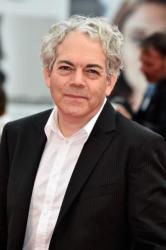
Dominique Delouche
 France
Biography of Dominique Delouche
Dominique Delouche is a French director, screenwriter, producer, and artist. He was born and raised in Paris during the Second World War, and it was during this time that he had a profound artistic experience that would shape his professional career. Delouche's parents took him to the opera, and he was captivated by the beauty and contrast it provided to the German occupation he was living through. This experience sparked his passion for the arts and set him on a path towards a career in filmmaking.
Delouche's Catholic upbringing also had a significant impact on his spiritual development. As a child, he was deeply religious and found solace in his faith. Although he veered away from religion during the war due to the collaboration of some clergy members, he remained a devout believer throughout his life.
At the age of five, Delouche began learning music theory and became a student of the French pianist Jean Doyen. However, due to his family's struggles during the war, he had to put his music studies on hold for two years to focus on his health. When he returned to playing the piano, he realized that a career as a pianist was not feasible and shifted his focus to classical singing. He studied under renowned vocalists Germaine Lubin and Geneviève Touraine, and even won prizes at international vocal competitions. However, his passion for visual art and architecture eventually led him to pursue a career in film. He studied at the National School of Fine Arts and later enrolled in the Higher Institute of Cinematography.
Delouche's career in filmmaking began with his attendance at film festivals, where he had the opportunity to see multiple films in a day. It was at the Venice Film Festival in 1954 that he met Federico Fellini, who was presenting his film "La Strada." Delouche was deeply moved by the film and felt compelled to express his admiration to Fellini. This encounter led to a five-year partnership, during which Delouche worked as Fellini's assistant. This period was a formative and significant time in Delouche's life.
After working with Fellini, Delouche returned to France and released his first short film, "Béatrice ou la servante folle," in 1959. Following this, he continued to make short films, many of which focused on various forms of art and influential artists. His first feature film, "Twenty-four Hours in the Life of a Woman," based on a novella by Stefan Zweig, was selected for the official competition at the Cannes Film Festival in 1968. Delouche went on to direct two more successful feature films, "The Husband" and "Divine."
In addition to his work in film, Delouche has also directed and designed sets for theatrical productions. He has worked with opera houses and theater companies, creating visually stunning productions of operas and plays. His collaborations have included works such as "Béatris de Planissolas," "Dido and Aeneas," and "Manon Lescaut."
Delouche's films have received critical acclaim and have been screened at various international festivals. His documentaries on ballet and dance have garnered him a reputation in the dance community. He has focused on preserving dance traditions and passing on the legacy of dance from one generation to another. Some of his notable works include "Yvette Chauviré – Une étoile pour l'exemple," "Les cahiers retrouvés de Nina Vyroubova," "Serge Lifar. Musagète," and "Balanchine in Paris."
Delouche's contributions to the arts and his dedication to preserving and celebrating dance have earned him recognition and accolades. He is a Knight of the French Order of Arts and Letters. In 2008, a retrospective of his work was held at the Film Society of Lincoln Center in New York, and in 2009, he was a guest at the Kinodance International Film Festival in St. Petersburg.
Delouche's personal life has also had a profound impact on his work. He has shared the story of his long-term partner, Bruno, who passed away after a battle with AIDS. Bruno's struggle taught Delouche valuable life lessons and deepened his understanding of suffering and faith.
Dominique Delouche's artistic career and dedication to preserving the arts have made him a respected figure in the film and dance communities. His films and theatrical productions continue to inspire and captivate audiences around the world.