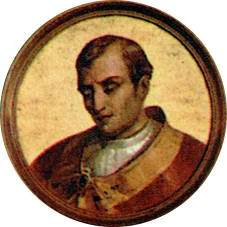
Donus
Donus led the Church of Rome for less than two years, during a period when religious disputes and imperial politics shaped daily life in Italy. The surviving record of his papacy is brief, but it remembers him as a builder and as a leader who strengthened Rome’s ties with other Italian churches. His pontificate also unfolded amid the long-running debate over the nature and will of Christ that divided Christian leaders across the Byzantine Empire.
From Roman Cleric to Pope
Donus was born in Rome, the son of a man named Mauricius. Very little is known about his early life or the path that brought him to the papacy. After the death of Pope Adeodatus II in June 676, Donus was elected and consecrated bishop of Rome on 2 November. The delay reflected the political realities of the time: Rome was part of the Byzantine Empire, and imperial involvement influenced the confirmation of papal elections.
Donus served until his death on 11 April 678. His short tenure came during a delicate period in relations between Rome and Constantinople. The controversy known as Monothelitism concerned whether Christ had one will or two, human and divine. Imperial policy had attempted to limit debate, while Rome continued to reject the theological position associated with Monothelitism. Emperor Constantine IV began to seek a path toward reconciliation, but the invitation for formal talks reached Rome only after Donus had died. His successor, Agatho, would take up the negotiations, which led to the Sixth Ecumenical Council in 680.
Relations with Ravenna
Donus’s papacy also addressed the status of the church in Ravenna. Its archbishops had asserted a degree of independence from Rome, a claim that had received imperial support earlier in the century. The Liber Pontificalis, an early collection of papal biographies, credits Donus with ending the dispute and bringing Ravenna back under Roman jurisdiction. Later historians have noted that the settlement was complicated and that tensions continued, but Donus’s reign marked an important stage in the effort to restore closer ties.
Churches and the City
The same early papal record highlights Donus’s building work. He had the open atrium before the old St. Peter’s Basilica paved with large white marble slabs. The space, known as the “Paradise,” formed the approach to the church and made a striking impression on visitors and pilgrims. Donus also restored a church dedicated to St. Euphemia and repaired a church on the Via Ostiensis associated with the apostles Peter and Paul.
A community of Syrian monks at a Roman monastery was also found by church authorities to hold beliefs classified at the time as Nestorian. Accounts say Donus dispersed the monks among other houses and transferred their monastery to Roman clergy. This episode reflects the intense concern with doctrinal conformity that characterized church leadership in the period, as well as the presence of Christian communities from across the eastern Mediterranean in Rome.
Legacy
Donus was buried at St. Peter’s after his death in 678. No writings or personal testimony from him survive, and his reputation rests largely on institutional records and later chronicles. Those sources remember a pope who invested in Rome’s churches and helped navigate strained relationships with Ravenna and the Byzantine court. His brief tenure formed part of a wider transition: the groundwork for theological reconciliation with Constantinople was laid during his time, even though its formal resolution would come under his successor.