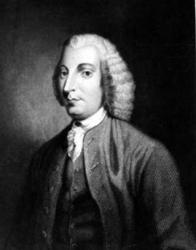
Dorothy Leigh Sayers
 Great Britain
Biography of Dorothy L. Sayers
Dorothy L. Sayers was an English writer, philologist, playwright, and translator. She was born in Oxford into the family of an Anglican priest, Reverend Henry Sayers, who served as the rector of Christ Church Cathedral Choir School. She received her primary education at Godolphin School in Salisbury, Wiltshire, and later attended Somerville College, Oxford. In 1915, she graduated with a bachelor's degree in French, and in 1920 she obtained a master's degree, becoming one of the first women to receive an academic degree from Oxford.

After college, Dorothy Sayers worked as a proofreader at the Blackwell University Press and later taught at École de Roch in Normandy. From 1922 to 1929, she worked as a copywriter at Benson's advertising agency in London. Her literary career began in 1916 with the publication of a poetry collection called "Op I." In 1923, she published her first detective novel, "Whose Body?," which introduced her famous character Lord Peter Wimsey. The novel was a success, and in the 1920s, she published several more Wimsey novels, including "Clouds of Witness" (1926), "The Unnatural Death" (1927), and "The Unpleasantness at the Bellona Club" (1928).

In her personal life, the 1920s were tumultuous for Dorothy Sayers. She became involved with a man named Bill White, a car salesman, and in 1924, she gave birth to their illegitimate son, John Anthony. To avoid scandal, she kept the birth a secret and entrusted the care of her son to her cousin, Ivy Shrimpton. Dorothy financially supported her son through her work at Benson's and the growing success of her books. In 1926, she married Oswald Arthur Fleming, a journalist and divorced father of two. They later adopted John Anthony, although he never lived with his adoptive parents. Dorothy Sayers refused to acknowledge her biological motherhood throughout her life.
In 1929, Dorothy Sayers was financially stable enough to leave her job at Benson's and dedicate herself full-time to writing. She became one of the founding members of the Detection Club, an organization of mystery writers that included Agatha Christie, G.K. Chesterton, and Ronald Knox. In the 1930s, she continued to write detective novels, many of which reflected her personal experiences. She also ventured into playwriting, with her play "Busman's Honeymoon" premiering in 1936.
Dorothy Sayers was a devout Christian and actively engaged in apologetics and theology. She wrote numerous essays and books on religious topics, including "The Mind of the Maker" (1941) and "Creed or Chaos? And Other Essays in Popular Theology" (1947). In the 1940s and 1950s, she also traveled extensively, giving lectures and participating in the life of her London parish, St. Thomas and St. Anne. As an academic and translator, she translated various works, including Thomas the Anglo-Norman's "Tristan in Brittany" and "The Song of Roland." Her most notable translation work was Dante's "Divine Comedy," with her translation of "Inferno" published in 1949 and "Purgatorio" in 1955.
On December 17, 1957, Dorothy Sayers passed away suddenly from heart failure, leaving her translation of "Paradiso" unfinished. Her colleague and friend Barbara Reynolds later completed the translation. Dorothy L. Sayers left a lasting legacy as a writer, theologian, and advocate for women's education and literary achievements.