
Dudley North
 Great Britain
Biography of Dudley North
Dudley North, an English merchant, politician, economist, and writer, was born on May 16, 1641, in Westminster. He was involved in foreign trade, particularly in Turkey, and spent several years in Constantinople and Smyrna. Upon returning to London with a fortune, North continued to trade with the Levant. His expertise in the commercial field caught the attention of the government, with influential recommendations from his brother, Lord Guilford, playing a significant role. During the Tory reaction under Charles II, North served as one of the sheriffs in London. He was knighted and appointed as a customs commissioner, then treasurer, and later customs again.
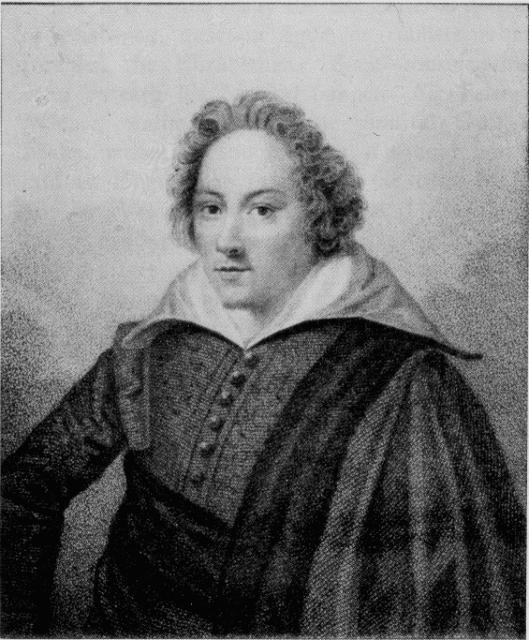
As a Member of Parliament during the reign of James II, North was responsible for all matters related to the royal revenues, according to his biographer Roger North. After the Glorious Revolution of 1688 in England, North was held accountable for an allegedly unconstitutional inquiry conducted in his office as sheriff. Several manners and customs adopted in the East were reflected in North's printed works, which were prepared by his brother. His treatise titled 'Discourses upon Trade,' primarily discussing investment, coinage, increase and decrease of money, was anonymously published in 1691. This work was edited by J.R. McCulloch in 1856 and included in the 'Select Collection of Early English Tracts' published by the Political Economy Club in London.
Contributions to Economic Thought
Advocating for the implementation of duty-free trade with restrictions that gained power with the Revolution, North's treatise highlights that wealth can be acquired without gold and silver if human industry is embraced. According to his arguments, it would be a mistake to assume that trade stagnation arises from a lack of money; stagnation occurs either due to market saturation, disorder in foreign trade, or decreased consumption caused by poverty. North emphasized the significance of domestic trade more than his predecessors. Regarding the level of investment, North claimed that its magnitude, like the price of any commodity, depends on the balance of supply and demand, and that a low level of investment is a result of relative capital increase, rather than the outcome of random mechanisms advocated by Sir Josiah Child and others.
Engaged in a debate on duty-free trade, North stated that prices should be determined by themselves, not fixed by law, and that any forcible intervention in price formation brings harm rather than benefit. No individual can become rich through government regulation, and only peace, freedom, and unhindered economic activity contribute to material prosperity. Wilhelm Roscher, the founder of the historical school of political economy, named North one of the triumphs of the English economists of the 17th century, followed by John Locke and William Petty in this prestigious ranking. Renowned historian of economic thought Mark Blaug included North on the list of '100 Great Economists Before Keynes'.


