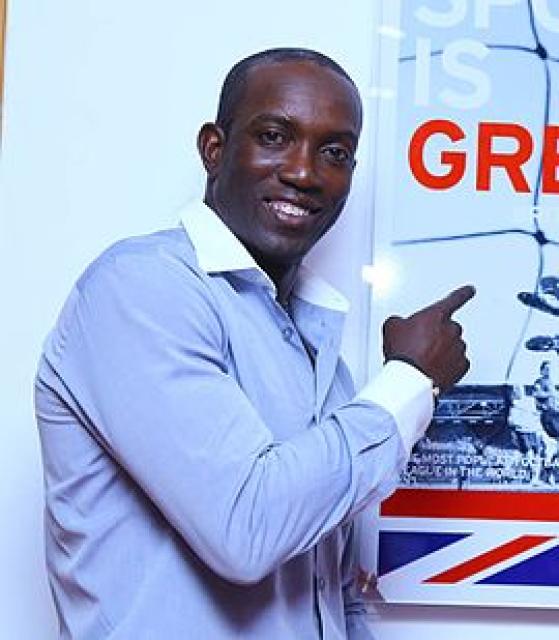
Dwight Eversley Yorke
 Tobago
Dwight Yorke: Trinidad and Tobago Football Legend
Early Life and CareerDwight Yorke, born in the humble village of Canaan in Trinidad and Tobago, is a legendary footballer who has left an indelible mark on the sport both domestically and internationally. His journey to stardom began on the beaches of his hometown, where he would collect crabs to sell and earn money to buy football boots. Yorke attended Bon Accord Secondary School, where he played for the school's football team at the age of eleven. He later transferred to Signal Hill Comprehensive School, where he joined the youth club of the same name at seventeen.
Aston Villa (1989-1998)
Yorke's talent caught the attention of Graham Taylor, the then-manager of Aston Villa, during the team's tour of the West Indies in 1989. He played for the Signal Hill team that faced Aston Villa in an exhibition match, impressing Taylor enough to offer him a trial in England. Yorke signed a permanent contract and made his debut for Aston Villa against Crystal Palace on March 24, 1990. Though Palace won the match 1-0, Yorke's performances over the years saw him establish himself as one of the best forwards in the English Premier League.
In the 1992/93 season, Yorke scored the winning goal against Wimbledon on February 27th. On March 20th, he netted a brace against Sheffield Wednesday, which proved to be the only goals in the match. One of Yorke's most memorable performances came against Liverpool in the following season, where he scored two goals to secure a 2-1 victory for Villa. In the 1995/96 season, he received his first yellow card during his time at Aston Villa in a match against Nottingham Forest that ended in a 1-1 draw, with Yorke scoring Villa's only goal.
After a productive second half of the season, scoring five goals in four matches in February, including braces against Leeds United and Bolton Wanderers, Yorke helped Villa reach the League Cup final in 1996. Villa emerged victorious with a 3-0 win over Leeds United, although Yorke did not score in the match. On September 30, 1996, he scored a hat-trick against Newcastle United but was unable to prevent Newcastle from winning 4-3. Despite being down 3-1 at halftime and Villa reduced to 10 men after Mark Draper was sent off, Yorke led a valiant fightback, scoring two goals in the second half to complete his hat-trick, only for Villa to concede a fourth goal later on.
Yorke's performance in this match caught the attention of Manchester United scouts, and negotiations for his transfer began in August 1998. Yorke made 287 appearances for Aston Villa, scoring 98 goals. However, his departure from the club was marred by controversy. Then-manager John Gregory indicated he would only sell Yorke to Manchester United in exchange for Andy Cole, United's striker. Yorke subsequently confronted Gregory, expressing his desire to leave the club. Gregory responded by stating he would have shot Yorke if he had a gun in his office.
Yorke played in Villa's opening match of the season against Everton in August 1998, but made no effort to impact the game, as he was unhappy about being prevented from leaving the club. Aston Villa had no choice but to sell, and Yorke joined Manchester United for a fee of £12.6 million in August 1998. Despite spending nine years at Aston Villa, Yorke's departure was met with some resentment from a section of the club's supporters due to his perceived poor conduct leading up to his departure, as well as his subsequent spell at rival club Birmingham City.





