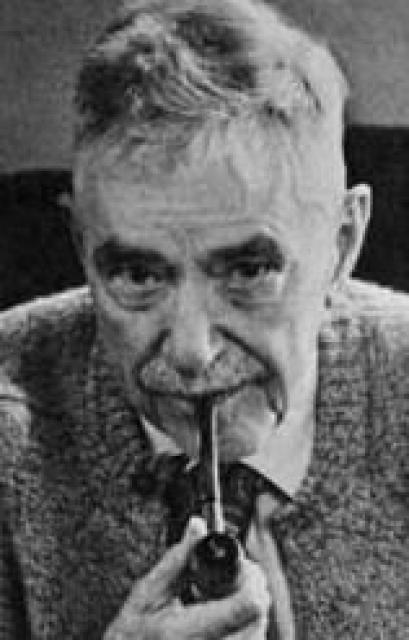
Earl Browder
 USA
USA- Biography of Earl Browder
- Early Political Career
- Leadership and Controversy
- Shift in Views
- Break with the Soviet Union
- Exclusion from the Communist Party
Biography of Earl Browder
Earl Browder was born in Connecticut in 1891. He was the son of a civil servant. Despite not receiving a formal education, Browder easily spoke about serious political issues.
Early Political Career
From 1906 to 1912, Browder was a member of the Socialist Party. During World War I, he opposed the involvement of the United States. It was largely due to these statements that Browder was arrested and spent the period from 1919 to 1920 in prison. In 1920, he joined the Communist Party of the United States.
Leadership and Controversy
Browder quickly climbed the ranks within the Communist Party. By 1930, he was elected as the party's general secretary. Simultaneously, starting from 1935, Browder became a member of the Executive Committee of the Comintern. Despite his communist beliefs, he was quite popular in the country. During his leadership of the Communist Party, the total number of party members reached 100,000.
Shift in Views
In the 1940s, Browder presented the theory of "class world" and "class cooperation," which immediately drew criticism from the Soviet Union and its supporters around the world. In his speeches, Browder talked about the progressiveness of capitalism in the United States and the exceptional role of America in its development. He proposed disbanding the Communist Party of the United States and replacing it with an educational Communist Political Association.
Break with the Soviet Union
By the end of World War II, Browder began to distance himself from the Soviet Union, suggesting the idea of peaceful coexistence between communism and capitalism in the same year. This political position of Browder became known as "Browderism." However, his stance of "neither yours nor ours" did not sit well with many.
Exclusion from the Communist Party
In 1946, Browder was expelled from the Communist Party of the United States. In 1949, trials of Browder's supporters took place in Budapest and Prague in Hungary and Czechoslovakia, respectively. It is worth mentioning that in 2003, David Satter's book "Love and Hatred: Kings of Politics and Business in Russia" was published, which tells the story of many business sharks in Russia and beyond, as well as the history of the great Earl Browder.


