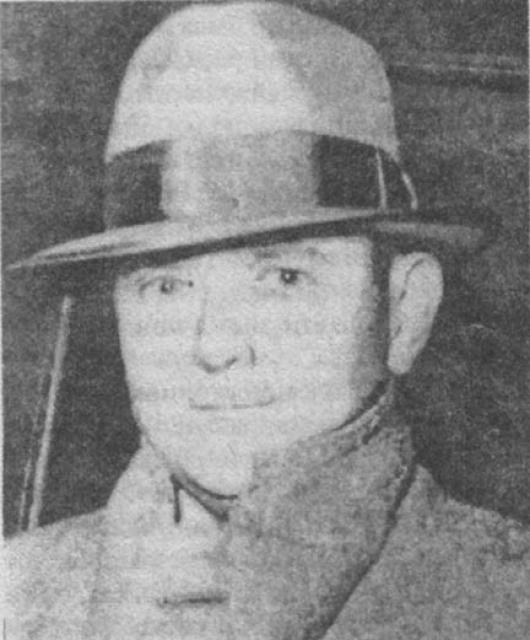
Edgar Foitinger
 Germany
The Life of Edgar Foitinger - A Spy of Genius
Edgar Foitinger was born on November 9, 1894, in Metz, into a family of musical goods traders. He attended a gymnasium until 1907 and then joined a cadet corps at the age of 13, where he distinguished himself with his brilliant abilities and fearlessness.
At the beginning of World War I, after passing his final exams, Foitinger joined a heavy artillery regiment and was sent to the front. He participated in many battles and at the age of 21 was awarded the Iron Cross, 1st Class, for bravery. In 1919, Foitinger joined the Reichswehr, but he was not well-liked by his superiors. He changed garrisons multiple times during his service until he finally found a permanent position at a sports school for the army (he was a natural-born athlete). He soon made a good match and married the daughter of a well-known industrialist, Brown-Boveri, but he continued to be a heartbreaker and playboy. He was greatly loved by his subordinates.
The Master Spy
Edgar Foitinger, a former general of the German Wehrmacht, was the highest-ranking spy in the Federal Republic of Germany, engaged in gathering secret information. He was a man of remarkable organizational abilities who was never caught spying during his lifetime. Only after his death did it become known that he was a Soviet agent.
After his release from prison, Edgar Foitinger resumed his previous connections with former generals of the Wehrmacht and obtained the necessary information from them. He also reestablished his relationship with Colonel von Hinkelday, who had been his adjutant during the war. Foitinger offered Hinkelday to be a co-author of his memoirs and explained that it was necessary to compare the military aspects of the past and present. The Colonel willingly provided him with secret operational documents from the Bundeswehr, including information about the use of nuclear weapons in the event of war and the training system of the airborne troops, among others. Foitinger often stayed in Hinkelday's office, even in his absence, as a senior military officer, he had unrestricted access to the Ministry of Defense.
Every three months, Foitinger handed over the gathered information to the GRU resident in East Berlin. Being an excellent organizer, he even involved his children in the work, although they were unaware of it.
The Unveiling
In January 1960, Foitinger went on another meeting in East Berlin. He suffered a heart attack on the train, and from the station, he was taken to the hospital. From there, he managed to inform his wife of the address of the person he was supposed to meet. Thus, the resident had the opportunity to conceal Foitinger's true purpose of the trip to East Berlin.
General Foitinger passed away on January 21, 1960. His secret was never revealed if it wasn't for the Soviet resident who tried to contact Colonel Hinkelday again. Citing Foitinger, the resident showed Hinkelday copies of documents that he had been passing on to the general. Hinkelday was offered to continue Foitinger's work, but he adamantly refused to cooperate with the Soviet intelligence services and reported the incident to the military counterintelligence.
On December 18, 1962, Colonel Hinkelday appeared in court on charges of unintentional espionage. He was sentenced to six months of conditional imprisonment. As for the main culprit, General Foitinger, the court ruled: "The details of his espionage activities and the truth about him died with him."