
Edgar Schein
 Switzerland
- Biography of Edgar Schein
- Early Life and Education
- Professional Career
- Contributions to Organizational Culture
Biography of Edgar Schein
Edgar Schein is a renowned expert in the field of organizational culture and values. He is known for his model that aims to facilitate understanding of the methods and principles upon which organizational cultural systems are built.
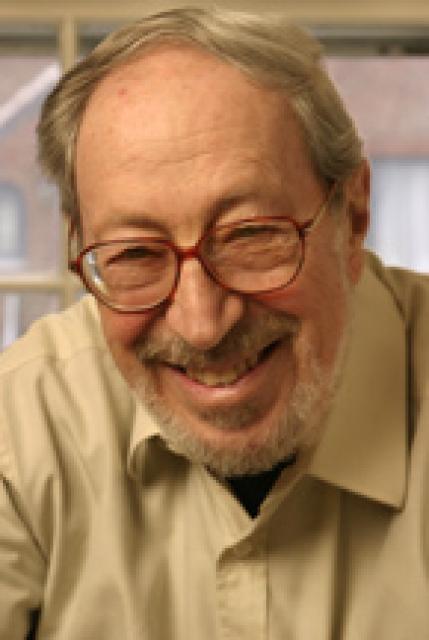
Early Life and Education
Edgar Schein was born in Zürich, Switzerland. During his childhood, he lived in Russia and Czechoslovakia before his family finally settled in the United States. His father was a physicist, and Edgar initially considered following in his footsteps. However, he developed a fascination for social psychology and decided to pursue it as his career path.

In 1947, Schein completed his bachelor's degree at the University of Chicago. Two years later, he obtained his master's degree from Stanford University. In 1952, he earned his doctorate in social psychology from Harvard University. During his dissertation work, Schein explored various related disciplines such as sociology, anthropology, and clinical psychology, which influenced his future research.
Professional Career
After completing his doctoral studies, Schein served in the army, specializing in the repatriation of Korean prisoners of war. He later returned to his passion for psychological research, initially focusing on brainwashing techniques and persuasion. In 1956, Schein concluded his military service and received an invitation to join the faculty at the MIT Sloan School of Management.
Douglas McGregor, a prominent psychologist and author of "Theory X" and "Theory Y," invited Schein to join MIT. Before joining the university, Schein interned at the National Training Laboratories in Bethel, Maine, where he became interested in personal and organizational development.
Contributions to Organizational Culture
Edgar Schein developed his model of organizational culture in the 1980s. In his model, he identified three main levels. The first level consisted of observable and describable elements that had little meaning without considering the other levels and the larger cultural context. The second level involved the internal rules and norms of an organization, providing insight into its essence and direction. The third level encompassed subconscious aspects of behavior, often unnoticed even by individuals themselves, yet ultimately defining the essence of organizational culture.
Today, Edgar Schein's work continues to be highly influential in the field of management and organizational behavior. His insights into culture and values have helped organizations understand and improve their internal dynamics, ultimately leading to greater success and effectiveness.


