Susan Strange
 Great Britain
- Susan Strange: Pioneer in International Political Economy
- Early Career and Journalism
- Professor of International Relations
- International Political Economy (IPE)
- Power in IPE
- Energy and International Financial Markets
- States and Markets
- International Monetary System
- Personal Life
- Legacy
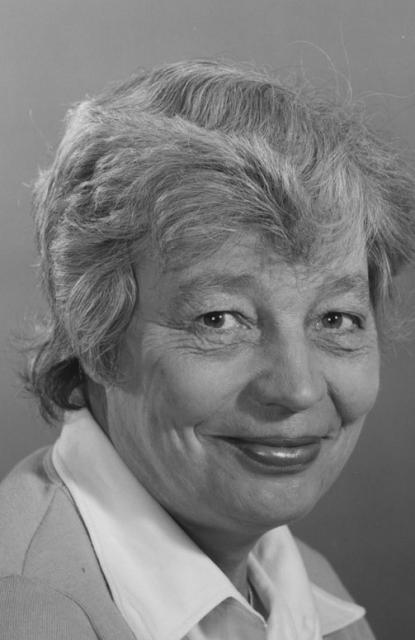
Susan Strange: Pioneer in International Political Economy
Early Life and EducationSusan Strange was born on June 9, 1923, in Langton Matravers, Dorset, England. She was the daughter of Louis Strange, an English aviator. She attended King Edward's School for Girls in Bath and the Lycée Carnot in France, eventually earning a bachelor's degree in economics from the London School of Economics (LSE) during World War II.
Early Career and Journalism
Strange's first academic appointment was as a research fellow at Chatham House in 1964. There, she wrote her seminal work, "Sterling and British Policy" (1971). She also founded the influential research group on IPE at Chatham House in 1971.
Professor of International Relations
In 1978, Strange became the first woman to hold the Montague Burton Professorship of International Relations at the London School of Economics. During her tenure, she established the UK's first master's program in IPE.
International Political Economy (IPE)
Strange was a pivotal figure in the development of IPE as a field of study. In her article "International Economics and International Relations: The Case for Cross-Fertilization" (1970), she argued for the necessity of interdisciplinary research on both economics and politics.
Power in IPE
Strange argued that power was central to IPE. She criticized economists for their lack of understanding of power and their excessive reliance on abstract economic models. Similarly, she criticized political scientists for neglecting international economics in their focus on state institutions and power.
Energy and International Financial Markets
Strange's work on power extended to the dynamics of the global economy. She differentiated between relational power (forcing one actor to do something they do not want to do) and structural power (shaping the structure of the global political economy).
States and Markets
In "States and Markets" (1988), Strange highlighted four key forms of power: security, production, finance, and knowledge. She argued that financial resources were the most overlooked channel of power, and that understanding international financial markets was essential to understanding the world's structure.
International Monetary System
Strange criticized the international monetary system for its lack of regulation and its increasing dominance over states. In "Casino Capitalism" (1986), she argued that the international financial system had become a "casino," where money flowed freely but without any central control.
Personal Life
Strange was married twice, first to Denis Merritt (1942-1955) and then to Clifford Sealy (1955-1993). She had six children.
Legacy
Susan Strange's groundbreaking work on IPE established her as one of the most influential thinkers in international relations. Her emphasis on power, the role of economics in international politics, and the importance of understanding international financial markets remains central to the field today.