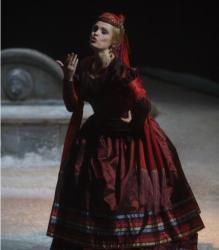
Edita Gruberova
 Slovakia
- Biography of Edita Gruberova
- Early Life and Education
- Operatic Debut and Career
- Recordings and Television
Biography of Edita Gruberova
Edita Gruberova is a Slovakian singer and one of the most prominent coloratura sopranos of the last decades. She is highly regarded for the purity and clarity of her voice, its flexibility and agility, dramatic interpretations, and her ability to hit high notes with astonishing power, which made her an ideal Queen of the Night in Mozart's "Die Zauberflöte" (The Magic Flute) in the early years of her career. She later gained great success, adding a range of major bel canto roles to her repertoire.

Early Life and Education
Edita Gruberova was born on December 23, 1946, in Bratislava, Slovakia. Her mother had Hungarian roots, and her father was of German descent. Her native language is Slovak. She began studying music at the Bratislava Conservatory, where she became a student of Mária Medvecká. She continued her education at the Academy of Performing Arts in Bratislava. As a student, Edita sang in the renowned folk ensemble "Ľúčnica" and also performed several times at the Slovak National Theatre.

Operatic Debut and Career
In 1968, Edita Gruberova made her operatic debut in Bratislava as Rosina in "Il barbiere di Siviglia" (The Barber of Seville). After winning a vocal competition in Toulouse, she was invited to join the opera company of the Tajovský Theatre in Banská Bystrica, where she stayed from 1968 to 1970. Despite the period of "normalization" in socialist Czechoslovakia, during which the borders with Western countries were practically closed, Mária Medvecká managed to arrange a secret audition for her student at the Vienna State Opera in the summer of 1969, which immediately engaged her. The following year, Gruberova made her breakthrough by singing the Queen of the Night. She then made the decision to emigrate to the West.
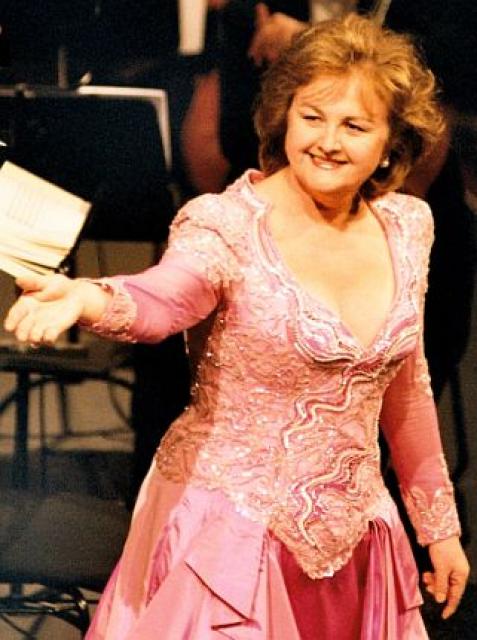
In the following years, she became a soloist in Vienna and was constantly invited to perform on the world's largest opera stages, especially for coloratura soprano roles. Gruberova made her debut at Glyndebourne in 1973 and at the Metropolitan Opera in 1977, both times as the Queen of the Night. In 1977, she also appeared at the Salzburg Festival as Thibault in "Don Carlo" under the direction of Herbert von Karajan. In 1981, Gruberova starred alongside Luciano Pavarotti in the film adaptation of "Rigoletto" directed by Jean-Pierre Ponnelle. Her debut at the Royal Opera House, Covent Garden, took place in 1984 as Giulietta in Bellini's "I Capuleti e i Montecchi". In addition, her repertoire included roles such as Zerbinetta in "Ariadne auf Naxos", Gilda in "Rigoletto", Violetta in "La traviata", Lucia di Lammermoor, Konstanze in "Die Entführung aus dem Serail", Manon, and Oscar in "Un ballo in maschera". In 1987, she performed Donna Anna at La Scala and Marie in "La fille du régiment". In 1992, she sang Semiramide in Zurich, and in 1990, she portrayed Queen Elizabeth I in Donizetti's "Roberto Devereux" in Vienna. In 2003, Gruberova played the lead role in "Norma", and in 2008-2009, she repeated her success in this role in Munich.
Recordings and Television
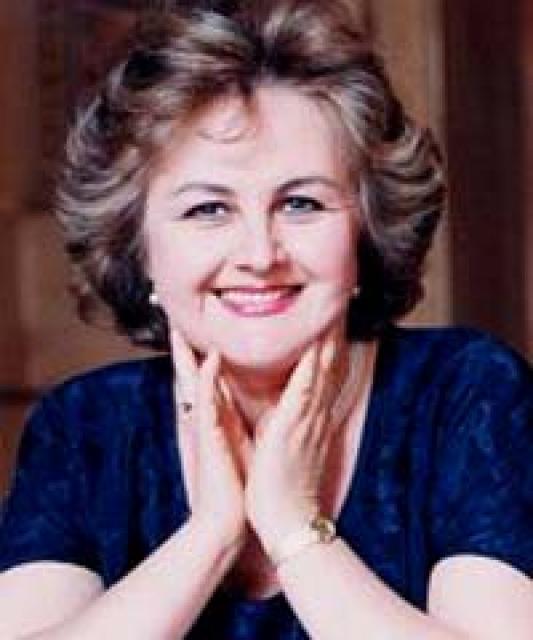
Edita Gruberova has made numerous recordings, particularly in recent years on the "Nightingale" label. Additionally, she can be seen in a dozen opera productions released on DVD.