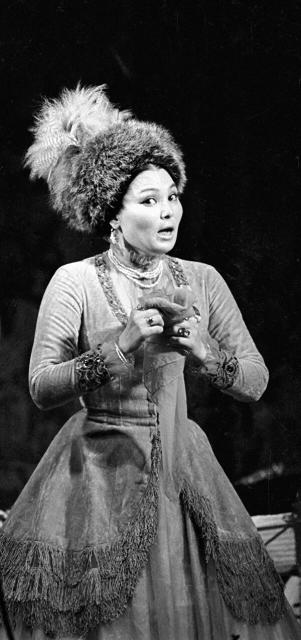
Rosa Baglanova
 Kazakhstan
Birth and Early Life
Roza Baglanova was born on January 1, 1922, in Kazalinsk, Kazakhstan. Her family was of the Zhalgalbai tribe of the Junior Juz. After graduating high school, she studied at the Kzyl-Orda Pedagogical Institute from 1939 to 1941.
Education and Wartime
In 1941, Baglanova transferred to the Tashkent Textile Institute, where she could receive housing and meals. Her singing talent was discovered by M. Kari-Yakupov, a soloist and director of the Tashkent Philharmonic. From 1941, she worked at the State Women's Ensemble of Song and Dance in Uzbekistan.
When World War II broke out, Baglanova volunteered for the front. She performed for Red Army soldiers and became known for her rendition of "Ah, Samara-gorodok." Her performances were praised by Lidia Ruslanova, who gave Baglanova the song as her "calling card."
Post-War Success
After the war, Baglanova returned to the stage. In 1947-1949, she worked at the Abay Kazakh State Academic Opera and Ballet Theater, and in 1949-1960, at the Djambula Republican Philharmonic. In 1960, she became the leading performer at the Kazakh State Concert Association "Kazakhconcert."
International Recognition
Baglanova's repertoire included world opera masterpieces, folk songs from various countries, and contemporary compositions. She toured extensively abroad, performing in countries such as Poland, Hungary, India, and Canada. Her performances earned her recognition and respect from international artists and world leaders.
Legacy and Memory
Roza Baglanova was a national icon and played a pivotal role in promoting Kazakh folk music and art. She was known as the "Little Kazakh" and was awarded the titles of People's Artist of the USSR and People's Hero of Kazakhstan.
In 2007, she published her autobiography, "Ainalayın khalymnan erkeletken" ("I am grateful to my people for their kindness to me"). Baglanova passed away on February 8, 2011, and was buried in the Kensai Cemetery.


