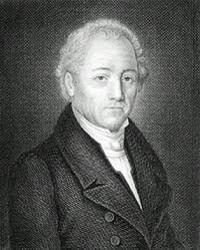
Eduard Bernstein
 Germany
Biography of Eduard Bernstein
Eduard Bernstein was a German publicist and political figure, as well as the ideologue of revisionism. He became renowned in the history of economic thought due to his attempt to reassess certain aspects of Marxism. He initiated the movement of Bernsteinism or revisionism (a name he did not like), which was fiercely opposed by Marxists led by Lenin.
Bernstein was born in Berlin into a family of a railway worker. After leaving gymnasium, he attended a commercial school and later worked as a bank clerk. In 1872, he joined the Social Democracy movement and in 1875 became an enthusiastic follower of Dühring's socialist doctrine. In 1878, he emigrated to Switzerland, where he came under the influence of the well-known socialist Höchberg, who advocated socialism based on human emotions and the idea of fair distribution of human happiness.
In 1880, Bernstein became the editor of the newspaper Social Democrat. It was during this time that he first met Engels, and their communication over the course of 15 years led to the radicalization of Bernstein's views and his enthusiasm for Marxism. In 1901, Bernstein returned to Germany and became a prominent political figure. By this time, his theoretical views had fully formed. He served as a member of the Reichstag from 1902 to 1918 and from 1920 to 1928. In his last years, Bernstein devoted all his efforts to defending the interests of the Weimar Republic. He actively opposed communism within the German labor movement and warned the German Social Democrats against attempting to replicate the revolutionary experience of Russia, to which he had a strongly negative attitude.
Bernstein played a significant role in the history of economic thought through his attempt to reconsider certain aspects of Marxism. He initiated the movement of Bernsteinism or revisionism, which was fiercely opposed by Marxists led by Lenin. Bernstein argued for the need to update Marxism based on new historical experiences and to clearly distinguish between socialism as a theory and as a political doctrine. In his articles "Problems of Socialism" (1896-1898) and his book "Problems of Socialism and the Tasks of Social Democracy" (1899), Bernstein proposed a program for revising Marx's teachings. He famously stated: "Movement is everything, the final goal is nothing." According to Bernstein, several points of Marx's teachings were scientifically untenable. These included Marx's belief in the progressive impoverishment of the proletariat with the development of capitalism, the concentration of capital, especially in agriculture, and the necessity of revolutionary mass uprisings.
In Bernstein's view, with the further development of capitalism, class contradictions do not intensify but rather soften, and the situation of the working class improves through state reforms. The transition to socialism occurs gradually through peaceful means, with the parliamentary system being the instrument through which the proletariat should strive to achieve a majority. Bernstein believed that in a complex society, the transformation of economic and political institutions can only happen gradually. The demands of democracy, solidarity, and self-determination are achieved in stages during this transformation. Any attempt to forcefully disrupt this gradual process can lead to a crisis with unpredictable destructive consequences. According to Bernstein, Marxist socialism contains purely speculative assumptions about the maturity of economic and social development, which, in reality, only show the initial sprouts of such development.
In his work "Is Scientific Socialism Possible?" (1901), Bernstein formulates his ideas on the ways to theoretically update Marxism. He sees socialism from three perspectives: as a theory, as a doctrine, and as a movement. He argues that sociology is the science that allows us to identify the patterns of social development. However, it cannot predict the future. Sociology can only clarify tendencies. Building forecasts for development and subordinating political movements to them as goals is not the task of theory and science. Bernstein believes that socialism as the unity of theory and practice cannot be scientifically justified nor does it need to be. The socialist political program can only be established with specific moral and legal values. As science should be free from value judgments, socialism is scientific only to the extent that it guarantees freedom of criticism of purely scientific elements in its program.
Bernstein's critique focuses on specific aspects of socialist doctrine, particularly Marxist doctrine, and the principles of political practice within the labor movement that have turned into dogma. However, his revision of certain Marxist and Engelsian teachings was perceived by most of his contemporaries as a complete rejection of Marxist theory and methodology, and his socialist program was seen as an alternative to Marxist socialism.
Bernstein's own attitude towards Marxism was ambiguous. According to him, Marxism was a theoretical synthesis of the philosophy of history, political economy of capitalism, and the theory of class struggle of the proletariat, which had been updated through recent research on social development. Although certain key concepts of Marxism had been refuted, the fundamental meaning and content of Marxism were confirmed by historical practice. Bernstein acknowledges the merit of Marxism in uniting socialism as a spiritual-theoretical activity and socialism as the struggle of oppressed masses for their liberation.
Intellectual honesty was the main characteristic of Bernstein's thinking. He was the first among Marx's disciples, comrades, and followers to raise the question of the status and effectiveness of Marxist socialism in the new historical situation.