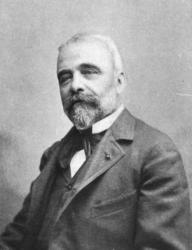
Eduard Gibbon
 Great Britain
Biography of Edward Gibbon
Edward Gibbon was an English historian born on April 27, 1737, in Putney. He was raised at home and also attended private schools. However, due to his weak health, he could not attend school regularly and thus received most of his education on his own, reading an incredible amount of books. In 1752, he entered Magdalen College, Oxford, which did not contribute much to his education. It was during this time that he converted to Catholicism, a decision that meant parting ways with Oxford and a career in the government. Concerned, his father sent him to Lausanne, Switzerland, under the care of Protestant pastor Daniel Pavillard, where he spent five years. In Switzerland, Gibbon renounced Catholicism, wrote the majority of his first book, established a friendship with Georges Deyverdun, and fell in love with Suzanne Curchod, but was forced to break up with her due to disapproval from his father and his inability to support a family without his assistance.
From 1760 to 1762, Gibbon served in a local militia in South Hampshire. His first book, "Essai sur l'étude de la littérature" ("Essay on the Study of Literature"), was published in 1761. Gibbon kept a diary, which was published by David Low in 1929 as "Gibbon's Journal to 1763." After the end of the Seven Years' War in 1763, he traveled to Paris and then returned to Lausanne. The diary he kept during this time was published by Jean Bonner in 1945 as "Le Journal de Gibbon à Lausanne." It was during his time in Italy that the future historian conceived the idea of writing a monumental work on the history of Rome. In Rome, he met John Holroyd, the future Lord Sheffield, who became his close friend. From 1765, Gibbon lived with his father in Buriton and, together with Deyverdun, worked on the journal "Mémoires littéraires de la Grande Bretagne" ("Literary Memoirs of Great Britain"), two issues of which were published in 1768 and 1769. In 1770, Gibbon anonymously published "Critical Observations on the Sixth Book of the Aeneid." The first volume of his magnum opus, "The History of the Decline and Fall of the Roman Empire," was published in 1776. The book was a grand success, although some critical reviews prompted him to write a response in 1779 titled "A Vindication of Some Passages in the... Decline and Fall of the Roman Empire." The second and third volumes of the book were published in 1781.
Gibbon, a supporter of Lord North, served as a Member of Parliament from 1774 to 1784 and as the head of the Board of Trade from 1779. In July 1779, he wrote the "Mémoire justificatif pour servir de réponse à l'exposé de la cour de France" ("Justifying Memoir in Response to the Exposition of the French Court") to defend the government's foreign policy. When the Board of Trade was abolished in 1782, Gibbon had to economize and decided to move to Lausanne, where he lived in Deyverdun's house, "La Grotte," from 1783 to 1793. He briefly returned to England in 1787-1788 to oversee the publication of the last three volumes of "The Decline and Fall of the Roman Empire." The last years of Gibbon's life were marred by Deyverdun's death, his own fragile health, and the threat of the French troops. In 1793, he hastily returned to England to support Lord Sheffield after the death of his wife. Gibbon subsequently lived in London and Sheffield Park in Sussex. He passed away in London on January 16, 1794. His work that immortalized his name, "The History of the Decline and Fall of the Roman Empire," covers the period from the end of the 2nd century AD (during the reign of Commodus) to the fall of Constantinople in 1453. Initially, Gibbon planned to conclude his work with the fall of the Western Roman Empire, but he expanded it, adding three more volumes to the already published three. It was perhaps the first historical work in Western literature that, despite its scholarly nature, appealed to a wide audience and received enthusiastic reception. Thanks to its magnificent style, the book continues to be read today, although many of the ideas it presents have long been overcome and its general enlightenment-anti-Christian pathos appears outdated.