Edvard Westermarck
 Sweden
- Education and early research
- Fieldwork and international career
- Morality, religion, and public life
- Final years and legacy
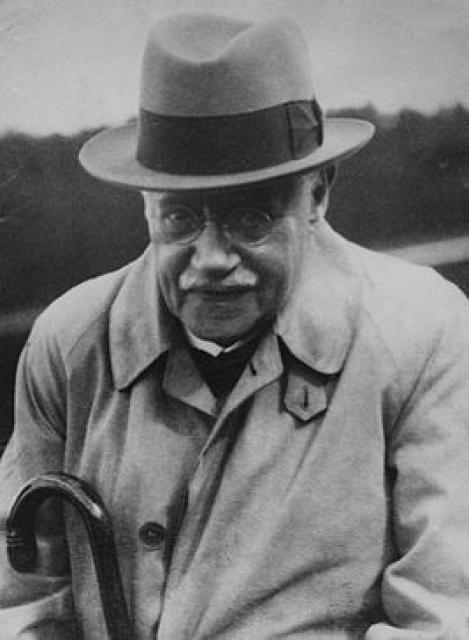
Edvard Westermarck was a Finnish philosopher, sociologist, and anthropologist whose research connected intimate social customs with broad questions about human nature and morality. An internationally prominent scholar in his lifetime, he became known for The History of Human Marriage, extensive fieldwork in Morocco, and a theory that moral judgments arise from human emotions rather than universal rational rules. He also used his public standing to argue for religious freedom and tolerance.
Education and early research
Born in Helsinki on November 20, 1862, Westermarck grew up in a prosperous Swedish-speaking family in Finland, then an autonomous grand duchy of the Russian Empire. His father, Nils Christian Westermarck, worked as a university bursar and had academic connections; his mother came from a scholarly family. He was especially close to his mother and to his sister Helena, who became a noted artist. Though he had suffered serious illness as a child, he later pursued an active life of travel and research.
At the Imperial Alexander University in Helsinki, he initially studied aesthetics, modern literature, and history, but graduated in philosophy in 1886. He became increasingly interested in sociology and anthropology, fields then taking shape as academic disciplines. For his doctoral research he examined marriage across societies, drawing on a wide range of historical and ethnographic accounts. The expanded study appeared in English as The History of Human Marriage in 1891. It challenged influential theories that early human society had passed through a stage of sexual promiscuity or group marriage, and argued instead for a more varied history of family and marriage customs. The book brought him international recognition and was revised and enlarged through later editions.
Fieldwork and international career
Westermarck first traveled to Morocco in 1898. What was initially one destination among others became a major focus of his research: he returned repeatedly and spent long periods there, including two years from 1900 to 1902. His work examined marriage ceremonies, religious beliefs, magic, spirits, customary practices, and proverbs. He learned from local communities and worked for decades with Moroccan research assistant and travel companion Sidi Abdessalam el Bakkali. His books on Moroccan life included Marriage Ceremonies in Morocco (1914), Ritual and Belief in Morocco (1926), and Wit and Wisdom in Morocco (1930).
His academic appointments spanned Finland and Britain. After becoming a docent in sociology at Helsinki in 1890, he was appointed professor of practical philosophy there in 1906. He taught sociology at the London School of Economics from 1904, becoming its professor in 1907 and holding the post until 1930. From 1918 he was professor of philosophy at the newly established Åbo Akademi University in Turku and served as its rector. Special arrangements allowed him to divide his time between universities in Finland and England and to continue his fieldwork. He taught several generations of scholars, including social anthropologists Hilma Granqvist, Rafael Karsten, and Gunnar Landtman, as well as the Polish-born anthropologist Bronisław Malinowski.
Morality, religion, and public life
Westermarck’s anthropological work and moral philosophy developed together. In The Origin and Development of the Moral Ideas (1906–08), he compared moral customs across societies and argued that moral judgments stem from emotions of approval and disapproval. Ethical Relativity (1932) later set out this position in a concise philosophical form. His approach, influenced by David Hume, Adam Smith, and evolutionary thought, offered an early bridge between social science and debates about moral relativism.
He also studied how childhood proximity could shape adult attraction. His account of the reduced sexual attraction often observed between people raised together from early childhood became associated with the term “Westermarck effect.” The theory suggested that familiar co-residence, rather than a conscious knowledge of biological kinship alone, could help explain incest avoidance.
A freethinker critical of Christian institutions, Westermarck advocated freedom of religion and greater tolerance. With his friend Rolf Lagerborg, he helped establish the Prometheus association in 1905, which called for separation of church and state and civil marriage. He wrote in support of tolerance toward homosexuality and showed interest in women’s organizations, animal protection, and nature conservation. Christianity and Morals, published in 1939, returned to his argument that religious belief should not be treated as the sole source of moral conduct.
Final years and legacy
Westermarck remained active as a writer into old age and published Memories of My Life in 1927. In his later years he spent much of his time at a villa in Tangier, Morocco. He died in Tenhola, Finland, on September 3, 1939, aged 76. His influence endured through his books, his students, and the place he helped establish for sociology and social anthropology in Finnish universities. His archive of correspondence, field notes, manuscripts, and photographs preserves both the international reach of his scholarship and the depth of his Moroccan research.