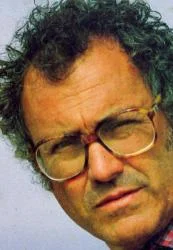
Edward Dauksza
 Lithuania
Edvardas Jokūbas Daukša, also known as Edward Jakób Dauksza (1836–c. 1890), was a Lithuanian poet, translator and participant in the 1863 uprising against Russian rule. He wrote in both Lithuanian and Polish, and his brief, turbulent life linked literary work with the national and political struggles of nineteenth-century Lithuania.
Family and EducationDaukša was born on May 13, 1836, in Biržai, in what is now Lithuania, into a family of Evangelical Reformed faith. His father, Kazimieras Kristupas Daukša, was a teacher, organist and scholar who wrote an early Lithuanian grammar and a Lithuanian-Polish dictionary. The family home gave the young Daukša an early grounding in Lithuanian language, history and cultural identity.
He studied at Evangelical Reformed schools in Kėdainiai and Slutsk. In 1854 he entered Moscow University to study medicine, then continued at Tartu, where he explored other fields, before moving to Königsberg in 1858 to pursue philology. He never completed a degree. Financial difficulties brought him back to Lithuania, and by 1860 he had settled in Vilnius, supporting himself with private lessons.
Poetry and the 1863 UprisingDaukša wrote poems in Lithuanian and Polish, often drawing on local life, Lithuanian folklore and the landscape around Biržai. His Lithuanian verse is described as lyrical and elegiac, with an affinity for folk songs. He also translated fragments of Adam Mickiewicz’s poem Konrad Wallenrod and works by Johann Wolfgang von Goethe, Friedrich Schiller and Lord Byron.
When the 1863 uprising began, Daukša returned to his home region and joined an insurgent unit led by Eliziejus Liutkevičius, serving as an adjutant. Russian authorities arrested him and sentenced him to hard labor and exile in Tobolsk, Siberia. The imprisonment separated him from his literary and political circles for many years.
Return and Final YearsDaukša returned to Lithuania in 1884. He traveled between villages and remained involved in efforts to resist Russian rule, but he had little financial security or stable home. He continued writing, though much of his work remained unpublished or was lost.
Around 1890, Daukša was found dead from exposure near Biržai during the winter. He was buried in the old cemetery at Semeniškės. His surviving poems and translations preserve the voice of a writer whose life was shaped by education, national awakening, rebellion and exile.