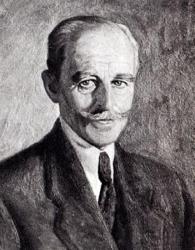
Edward Emerson Barnard
 USA
USAEarly Life and Discoveries
American astronomer Edward Emerson Barnard was born into poverty but harbored a passion for astronomy and photography. At 19, he saved enough money to purchase a small telescope. In 1881-1882, he made three comet discoveries, which earned him financial support from local patrons to pursue a degree at Vanderbilt University.
Observational Astronomer
After graduating, Barnard obtained his doctorate and became a professional observational astronomer. From 1887-1895, he worked at the Lick Observatory, studying planets and faint stars. He captured numerous photographs of the Milky Way and nebulae, becoming renowned for his research on "dark nebulae," known as Barnard objects, after his exhaustive atlas of them.
Astronomical Breakthroughs
In 1892, Barnard discovered Amalthea, Jupiter's fifth moon. In 1916, he identified Barnard's Star, one of the closest stars to our solar system. Its rapid movement earned it the nickname "Runaway Star."
Later Life and Legacy
Barnard passed away in 1923 in Williams Bay, Wisconsin. Throughout his career, he received numerous awards and distinctions, including the Lalande Prize, the Gold Medal of the Royal Astronomical Society, and the Janssen Medal.
In honor of Barnard's contributions, several astronomical features bear his name, including asteroid (819) Barnardiana, craters on the moon and Mars, a galaxy, a region on Jupiter's moon Ganymede, and a mountain in California. Asteroid (907) Rhoda is named after his wife.