Edward Frederic Benson
 Great Britain
Biography of Edward Frederic Benson
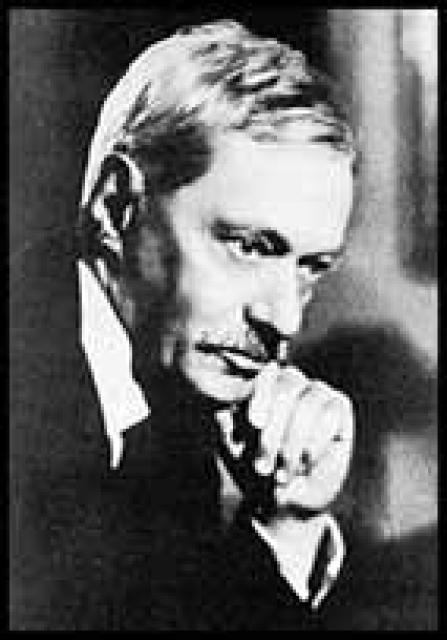
Edward Frederic Benson was born on July 24, 1867, in Berkshire, where his father held the position of headmaster at Wellington College. He was the fifth child in the family of Mary Sidgwick Benson and Edward White Benson. His father, a notable figure, served as the head of the university after Wellington College and later became the Canon of Lincoln Cathedral, the Bishop of Truro in Cornwall during the construction of the cathedral, and finally the Archbishop of Canterbury from 1883 to 1896.
Frederic, or Fred as he was called in the family, studied at Temple Grove School in East Sheen, Surrey, where he showed a special aptitude for music and the English language. However, this did not prevent him from ending up as one of the worst students, perhaps due to his love for entertaining friends and playing pranks. He then attended Marlborough College in Wiltshire, where he spent six years and devoted much of his time to sports.
At the age of twenty, Benson entered King's College, Cambridge. He graduated with honors, specializing in archaeology and developing a passion for everything related to Greece. His first major excavation was conducted beneath the walls of the city of Chester, where he made many important discoveries. Benson then traveled to Athens to attend the British School of Archaeology. In his first book, "Sketches from Marlborough" (1888), he lovingly recalled his school days. His first novel, "Dodo" (1893), brought him success and widespread recognition. The central character of the novel is a charming, interesting, humorous, heartless, and amoral woman who captivates those around her and brings immense trouble. She appeared in various forms in his subsequent books.
When Benson was not traveling or participating in archaeological expeditions, he lived with his parents at the Canterbury Archbishopric. He constantly wrote and produced about a hundred books, numerous short stories, articles, and brochures throughout his life. After the death of the family's patriarch, they moved first to Winchester and then to a house near Horsted Keynes in Sussex. Fred prepared his father's book on the life of St. Cyprian for publication, which his father had worked on for thirty years. This was the first of many occasions when Benson, the most persistent and meticulous member of the family, organized affairs, edited other people's works, or managed the affairs and finances of his parents and siblings.
For a brief period, he served as an administrator for the Red Cross Fund, created to aid Greek refugees from Thessaly, victims of the Greco-Turkish War in 1897. This activity was associated with some danger but provided material for future books. On his way back to England, Benson visited Capri and fell in love with the island, which had a significant influence on many of his works. In 1918, Benson's mother passed away, but by then all the children had grown up. All of Benson's siblings, except the eldest Martin, who died at the age of 17, published books. Arthur became the Master of Magdalene College, Cambridge. He authored many novels, a biography of Edward White Benson, several theological treatises, and memoirs. He also wrote the hymn "Land of Hope and Glory." Maggie and Nelly died young but managed to make names for themselves in archaeology and literature. Hugh, who initially practiced Anglicanism and later became a Jesuit and a prolific novelist, wrote theological treatises as well. However, Fred, who outlived his brothers and sisters, was the most prolific and popular author. Among his works are novels, comedies, memoirs, numerous biographies of notable individuals, books on sports, as well as stories about the supernatural and ghosts that still have many followers.
Today, E.F. Benson is perhaps best known for his series of books featuring the characters Emmeline Lucas (Lucia) and Elizabeth Mapp. The action in the stories published in the 1930s primarily took place in the fictional towns of Tilling (modeled after Rye) and Riseholme (modeled after Broadway in the Cotswolds). The books depict the rivalries, intrigues, and melodramas of small-town life. They are rich in descriptions recognizable to anyone who has walked the streets of Rye. The stories of Mapp and Lucia served as the basis for a ten-hour television series made in the 1980s. Benson also wrote a series of books that are invaluable for those studying social and dynastic history during World War I. They discuss Queen Victoria, her daughters, King Edward VII, the Kaiser, their relatives, and the outbreak of war.
Among the biographies he wrote are books about Sir Francis Drake, Ferdinand Magellan, Alcibiades, and Charlotte Brontë. Many experts consider his biography of Brontë to be the most comprehensive work on the novelist. Benson's connection to Rye began in 1900 when he first visited the novelist Henry James. If Benson did not stay with James, he often stayed with Lady Mod Warrander. Her house, located just outside Rye, provided an excellent vantage point to observe village life, and Benson used it as a setting for his novels "Colin" and "Colin II."
Several years after Henry James' death, Benson leased part of Lamb House. He worked at the Foreign Office in London but spent his weekends in Rye. In 1920, he signed a full lease agreement and lived in Lamb House until his death. His brother Arthur shared the house with him from 1922 to 1925, when he passed away.
Benson was elected mayor of Rye three times in the late 1930s, surprising himself with the zeal with which he took on the role and enacted fair laws to help the townspeople. In 1938, he became an honorary fellow of Magdalene College, Cambridge, an honor previously bestowed upon Thomas Hardy and Rudyard Kipling.
Edward Frederic Benson died on February 29, 1940, ten days after submitting his final manuscript to his publisher. It was his masterpiece of memoirs titled "Final Edition." Benson was buried in the town cemetery just outside Rye on the road to Playden.