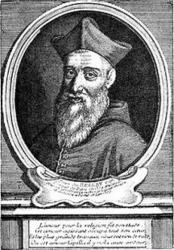
Edward Irving
 Great Britain
- The Life and Legacy of Edward Irving
- Rise to Prominence in London
- The Prophetic School and Eschatological Views
- Excommunication and Founding of the Irvingite Church
- Legacy and Influence
The Life and Legacy of Edward Irving
Early Life and EducationEdward Irving was born on August 4, 1792, in southern Scotland. After studying theology in Edinburgh, he became an assistant minister to Dr. Thomas Chalmers in Glasgow in 1819. Chalmers was the renowned founder of the Free Church of Scotland.
Rise to Prominence in London
Despite his passionate sermons, Irving struggled to find success in Glasgow. However, in 1821, he was invited to serve as a minister in London, where his eloquence and charisma earned him great respect. Notable among his beliefs was his conviction of the imminent end of the world and his perceived role as a prophet to his people.
The Prophetic School and Eschatological Views
In London, Irving joined the "Prophetic School" of wealthy banker Henry Drummond. They delved into eschatological issues, particularly the belief in the soon-to-come Second Coming of Christ. Irving argued that this event had been delayed due to the church's failure to abide by Ephesians 4:11, which outlined five ministries: apostles, prophets, evangelists, pastors, and teachers.
Excommunication and Founding of the Irvingite Church
Irving's mystical views drew the ire of the Presbyterian Synod of Scotland, which excommunicated him in 1833. Despite this, he gained support from members of the Church of England and established a separate congregation of his followers, known as the Irvingites.
Legacy and Influence
Irving died in 1834, but his congregation continued to exist, seeking to restore the practices of the early Church. They elected 12 apostles through their claimed prophets and organized their church along those lines. Their worship resembled Catholic and Orthodox traditions.
The Irvingite apostles preached in various Christian nations, but their following remained limited. To this day, Irvingite communities can be found primarily in England and North America. Irving's influence extended beyond his religious teachings, as he was a close friend of the renowned historian and essayist Thomas Carlyle.