Edward Ripley
 USA
USA- Biography of Edward Ripley
- Early Life and Education
- Military Career
- Connection with Abraham Lincoln
- Later Life and Business Ventures
- Books and Legacy
Biography of Edward Ripley
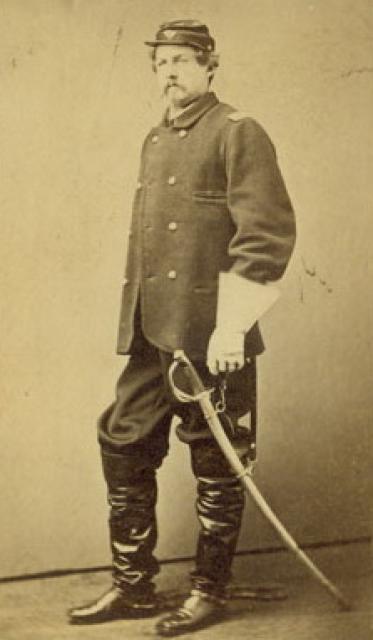
Edward Hastings Ripley was an American businessman and officer in the Union Army during the American Civil War. He is best known for commanding the XVIII and XXIV Corps brigades, leading the first troops to enter Richmond after the city's surrender.

Early Life and Education
Edward Hastings Ripley was born on November 11, 1839, in Rutland, Vermont. He attended a local school and later enrolled in Troy Conference Academy, now known as Green Mountain College in Poultney. From 1852 to 1858, Ripley studied at Union College in humanities. In his senior year, he left his studies to join the Union Army as a private in the 9th Vermont Infantry Regiment in May 1862. Despite leaving college, Union College awarded him a Bachelor of Arts degree the same year.

Military Career
Ripley rose through the ranks from sergeant to commanding officer. He led troops during the Shenandoah Valley Campaign in the summer of 1862, including the blockade of Suffolk, Virginia. As a major, Ripley was captured at the Battle of Harper's Ferry and participated in a prisoner exchange in January 1863. He continued to serve and engage in military actions in Virginia and North Carolina throughout 1863. In May, Ripley was promoted to lieutenant colonel and then to colonel a week later. He later commanded a military district in the Beaufort and New Bern area. In August 1864, he became a brigadier general and took command of the 1st Brigade, 2nd Division, XVIII Corps, serving along the James River during the closing operations of the war in Virginia. Ripley commanded the 2nd Brigade, including during the Battle of Chaffin's Farm and the Second Battle of Fair Oaks. He was wounded twice and later appointed to command the 1st Brigade, 3rd Division, XXIV Corps. These troops were responsible for controlling Union forces in Richmond after the Confederacy's surrender, extinguishing fires, preventing looting, and maintaining order. Ripley commanded the military district that included Richmond until the city's civil government was restored at the end of the war.
Connection with Abraham Lincoln
During Abraham Lincoln's visit to Richmond from April 4 to April 7, 1865, Ripley became aware of a conspiracy. He met with Lincoln, who listened to his concerns but ultimately refused to increase security measures. Lincoln believed it was essential to demonstrate to the people that the war was over and that no security measures could prevent someone from attempting to assassinate him.
Later Life and Business Ventures
After the war, Ripley returned to Vermont but also lived intermittently in New York. He sold marble for a time in partnership with his brother William. He constructed the Holland House hotel in New York, which belonged to his wife's family, and participated in the construction and operation of the Raritan River Railroad in New Jersey. Ripley also founded the American-Brazilian Steamship Line, served as president of the Rutland Marble Savings Bank, and vice president of the National Bank of Rutland County.
Books and Legacy
Ripley spoke and wrote extensively about his military experiences during the Civil War. One of his speeches was published as a book titled "The Capture and Occupation of Richmond, April 3, 1865" in 1907. His personal diary was published in 1960 under the title "Vermont General, The Unusual War Experiences of Edward Hastings Ripley." Edward H. Ripley passed away on September 14, 1915, in Rutland, Vermont.