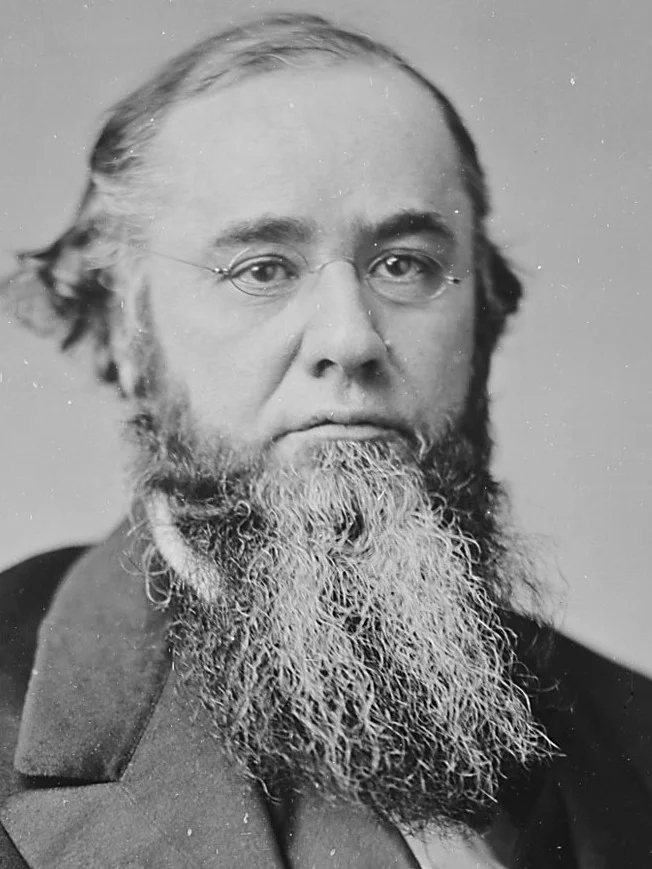
Edwin M. Stanton
- A Lawyer in Public Service
- Leading the War Department
- Reconstruction and Impeachment
- Final Months and Legacy
Edwin McMasters Stanton was an American lawyer and government official whose tenure as secretary of war spanned the Civil War and the opening years of Reconstruction. Known for his relentless work habits and forceful personality, he helped manage the Union’s military effort under President Abraham Lincoln. His later conflict with President Andrew Johnson turned Stanton into a central figure in the constitutional crisis that led to Johnson’s impeachment.
A Lawyer in Public Service
Stanton was born in Steubenville, Ohio, on December 19, 1814. After an apprenticeship with a bookseller, he studied law and entered the Ohio bar in 1836. He built a career as a lawyer, prosecutor, and legal adviser, working in Ohio, Pennsylvania, and Washington. He also served as counsel for Pennsylvania and represented the federal government in disputed California land grant cases.
In December 1860, near the end of President James Buchanan’s administration, Stanton became U.S. attorney general. Though his term was brief, the appointment brought him into national politics just as secession and civil war were approaching. He entered Abraham Lincoln’s cabinet in January 1862 as secretary of war.
Leading the War Department
Stanton took charge of a department responsible for organizing troops, supplying armies, and coordinating a rapidly expanding war effort. His demanding style could make him unpopular, but Lincoln relied on his administrative drive. Stanton pressed generals and officials for action and worked to strengthen the department’s oversight of military operations.
He remained secretary of war through the end of the Civil War. After Lincoln was shot in April 1865, Stanton helped manage the emergency in Washington and the government’s response to the assassination. He was widely associated with the words “Now he belongs to the ages,” spoken as Lincoln died, though accounts of the exact phrasing vary.
Reconstruction and Impeachment
Stanton continued in office under President Johnson, but the two men came into conflict over Reconstruction. Stanton opposed Johnson’s lenient approach toward former Confederate states and supported congressional efforts to protect the rights of formerly enslaved people. Congress passed the Tenure of Office Act in 1867 to restrict presidential removals of officials whose appointments had required Senate approval.
Johnson suspended Stanton in August 1867 while Congress was in recess. When the Senate later rejected the suspension, Stanton resumed his duties. In February 1868, Johnson again ordered him removed and appointed General Lorenzo Thomas as secretary of war ad interim. Stanton refused to leave his office and had Thomas arrested for attempting to take control of the department.
The House of Representatives impeached Johnson, citing the attempted removal of Stanton among its charges. The Senate acquitted the president by a single vote in May 1868. Stanton then left the War Department and returned to private legal practice.
Final Months and Legacy
In December 1869, President Ulysses S. Grant nominated Stanton to the Supreme Court. Stanton died in Washington on December 24, four days after the nomination and before he could take his seat. He was buried at Oak Hill Cemetery.
Stanton’s reputation rests on two demanding periods of public service: managing the War Department during a national crisis and defending his position during the clash between Congress and the presidency over Reconstruction. His career linked the military conduct of the Civil War to the constitutional struggles that followed it.