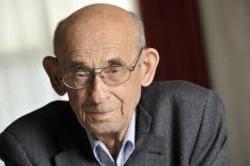
Elliott Horowitz
 Israel
- Education and Early Scholarship
- A Cultural Historian of Jewish Life
- Editor and Teacher
- Later Years and Legacy
Elliott Horowitz (1953–2017) was a Jewish historian whose work brought social and cultural history into close conversation with the study of religious life. Moving between American and Israeli academic worlds, he wrote about Jewish communities in early modern Europe, rituals, relations between Jews and Christians, and the ways people remembered the past. His book Reckless Rites: Purim and the Legacy of Jewish Violence became his best-known work.
Education and Early Scholarship
Horowitz grew up in Queens, New York. He studied at Princeton University, graduating in 1975, and completed a doctorate in religious studies at Yale in 1982. His dissertation examined Jewish confraternities in seventeenth-century Verona, a subject that reflected his lasting interest in the structures of communal life and the meanings people attached to ritual.
In 1982, Horowitz moved to Israel with his family. He taught Jewish history at Ben-Gurion University of the Negev and later at Bar-Ilan University, where he spent much of his career. His scholarship focused especially on medieval and early modern Jewish history, while also engaging with Renaissance Italy, Central Europe, Zionism, and British imperial history.
A Cultural Historian of Jewish Life
Horowitz examined the everyday practices, social boundaries, and cross-cultural contacts that shaped Jewish experience. He studied subjects such as confraternities, popular religion, family life, and the relationship between Jewish and Christian communities. By combining close historical research with the questions of anthropology and cultural history, he helped broaden how scholars approached religious communities of the past.
His most widely read book, Reckless Rites: Purim and the Legacy of Jewish Violence, explored Purim traditions and the ways Jewish communities responded to centuries of oppression. The book considered how ritual, memory, and historical circumstance could shape expressions of communal anger. Horowitz’s approach was notable for treating difficult subjects directly, while placing them within the pressures and power imbalances of their time.
He also wrote essays on Jewish history, historiography, travel, ritual, and cultural exchange. His work invited readers to look past simplified accounts of the past and to notice the contradictions and unexpected connections within it.
Editor and Teacher
From 2004 until his death, Horowitz co-edited the Jewish Quarterly Review, the oldest English-language journal devoted to Jewish studies. He was known as an energetic editor and a generous intellectual presence. He also held visiting appointments at universities in the United States, Canada, and Britain, including Harvard, Princeton, the University of Pennsylvania, and Oxford.
His colleagues remembered not only his breadth of learning but also a distinctive wit and an ability to move comfortably between academic scholarship and traditional Jewish learning. He had a wide range of interests, from Renaissance art to contemporary culture, and brought that curiosity to his work with students and fellow scholars.
Later Years and Legacy
Horowitz died at his home in Jerusalem on March 18, 2017, after a short illness. He was 64. He left behind a substantial body of work on Jewish life and memory, along with the students, colleagues, and readers he had influenced.
His scholarship helped make early modern Jewish history more socially textured and less isolated from the broader histories of Europe. By asking how communities practiced, adapted, and remembered their traditions, Horowitz showed how the study of Jewish history could illuminate the complexities of cultural life across borders and generations.