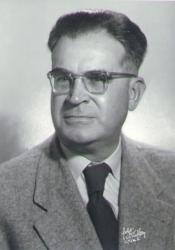
Pier Giovanni Capriata
 Italy
Italy- Early Life and Legal Career
- Historical Writing
- Controversy and Exile
- Return to Italy and "History of Italy"
- Correspondence with Mazarin
- Later Work and Recognition
- Legacy and Impact
Early Life and Legal Career
Pietro Giovanni Capriata was born in Genoa towards the end of the 16th century. He pursued a legal education and initially practiced law.
Historical Writing
Capriata's interest in historiography grew, and in 1625, he published his first work: "History of the Military Campaigns in Italy from 1613 to 1618." This pro-Spanish narrative of the War of the Mantuan Succession earned him popularity in his hometown, which supported Spain.
Controversy and Exile
However, Capriata's work drew the ire of Duke Charles Emmanuel I of Savoy, who ordered its burning. In a twist of fate, Capriata became embroiled in a pro-French conspiracy and was forced to flee to Madrid under Spanish protection.
Return to Italy and "History of Italy"
In 1633, after the conspiracy was suppressed, Capriata returned to Genoa and commenced work on his magnum opus: "History of Italy." The first volumes, published in 1638, covered events from 1513 to 1634. Capriata once again criticized the Duke of Savoy and the Venetian Republic, leading to controversy. The work was banned in the Papal States.
Correspondence with Mazarin
In 1648, Capriata corresponded with Cardinal Jules Mazarin, offering his services as a historian. Unlike his previous works, this later phase of his writing favored France's policies in Italy.
Later Work and Recognition
The final volumes of Capriata's "History of Italy," describing events up to 1650, were published posthumously in 1663. Despite allegations of bias, the work gained wide readership and was translated into English in 1663.
Legacy and Impact
Capriata's contemporaries labeled him as a "peacock feather that changed its color at every step." Nonetheless, 18th-century historians acknowledged a "degree of certain authority" in his work. Pietro Giovanni Capriata remains a significant figure in Italian historiography, providing valuable insights into the tumultuous events of the 17th century.