Eloisa
 France
Biography of Eloise
Eloise, the beloved of French philosopher and poet Pierre Abelard, was a prominent figure in the early 12th century. Not much is known about her early life, including her parents and childhood, except for the fact that she studied Latin and the wisdom of ancient classics at the Archantelle monastery and was adopted by her uncle, Fulber. However, it was the remarkable decades that followed, starting from the moment when Abelard, a master who desired to teach the young Eloise philosophy, took up residence in the house of Parisian canon Fulber, that captured the hearts of people for centuries.
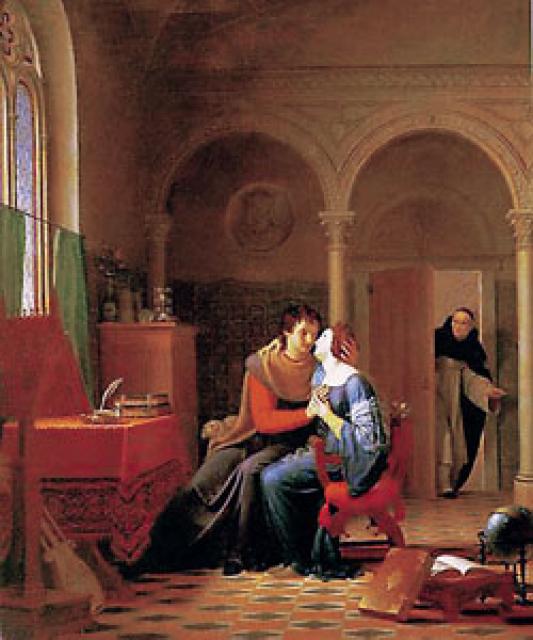
Abelard, a renowned and fearless philosopher, attracted students from all over Europe to study under him in Paris. However, he secretly fell in love with Eloise even before he began teaching her. Their love grew and consumed them, as Abelard abandoned his scholarly pursuits to write love poems. These poems were learned by knights, craftsmen, merchants, and citizens, and were sung not only in Paris but also in other cities and towns. Their love was profound, natural, and long-awaited, like a sun that melts away the darkness of a thousand-year-old cloud.
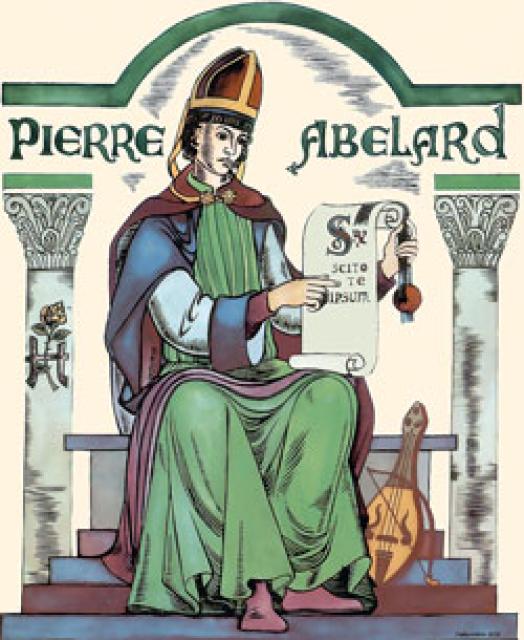
Unfortunately, their love story took a tragic turn when hired men brutally attacked Abelard while he peacefully slept at night. Eloise, after seventeen years of separation, wrote to Abelard expressing her sorrow and questioning his change in attitude towards her. She believed that their relationship was driven more by desire and passion than friendship and love. In her letter, she yearned for the sweetness of his words and the comfort of his presence, as they were her only solace in their physical separation.
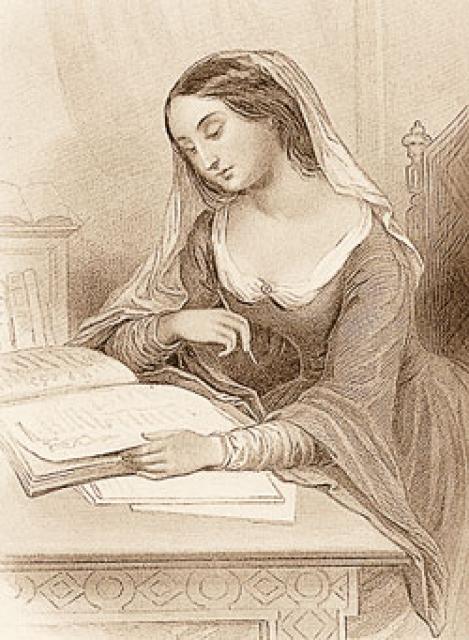
Abelard faced numerous hardships during this period. The Catholic clergy condemned him as a heretic and forced him to burn his philosophical treatise that defended human reasoning. He lived in seclusion by the ocean, fearing for his life every day. Eloise, as a young woman, had joined a monastic life not out of devotion but because of Abelard's insistence. She believed that she would not receive any reward from God for her actions, as they were not driven by love for Him.
One of the most remarkable aspects of Eloise's letters to Abelard is the way she addressed him. She referred to him as "sir, or rather, father, husband, or rather, brother, servant, or rather, daughter, wife, or rather, sister, Abelard - Eloise." However, she believed that these endearments were not enough and sought a name that was even more tender and pure, one that she could only imagine.
Eloise's love for Abelard was not just romantic; it encompassed a spiritual motherhood. She dedicated herself to him and their love, and she gave more to humanity than just her talent for writing. She became a shining light, illuminating the possibility of higher, more genuine forms of love that could not be extinguished.
Eloise died six years after Abelard, and she was buried next to him. She did not participate in intellectual debates or leave behind philosophical writings. Instead, her legacy was the letters she wrote to Abelard, which can be described as not merely love letters but as the embodiment of a new, tender, and pure form of love that she envisioned. She was younger than Abelard by twenty-two years, but her letters expressed a spiritual motherhood that touched the hearts of many.
Eloise's love story with Abelard marked the beginning of a new era - the Renaissance. It was not marked by great architecture, art, or exploration, but by great love. It was through their love that Dante, a nine-year-old boy, saw Beatrice dressed in noble crimson, setting him on a path to become a great poet. The power of their love allowed him to experience a cosmic force that moved the sun and the stars. This force, which Dante describes in his works, ultimately becomes the essence of the Divine Comedy.
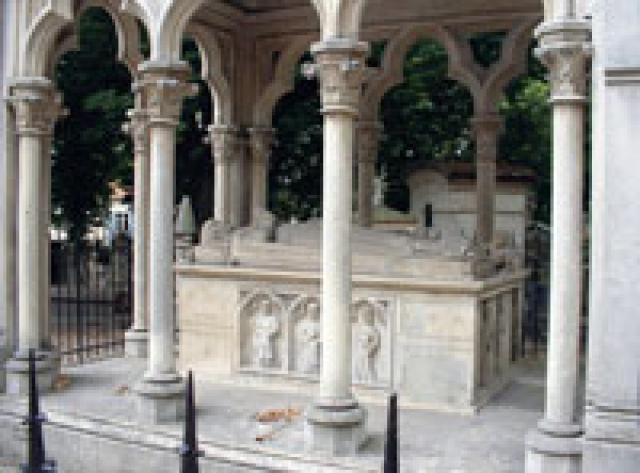
In 1817, Eloise and Abelard were finally reunited in death, finding their final resting place in the Pere-Lachaise cemetery in Paris.
Eloise's life and love story continue to inspire people even today. Her letters remind us of the enduring power of love and the impact it can have on individuals and society as a whole.


