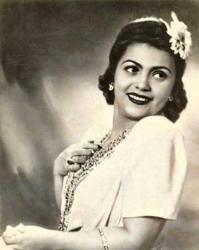
Ema Destinnova
- Early Life and Career
- Berlin Opera and International Acclaim
- London and Metropolitan Opera Debuts
- Versatility and Wagnerian Roles
- Wartime Struggles and Later Years
- Legacy
Early Life and Career
Born as Emilie Pavlina Věnceslava Kittlová in Prague, Austria-Hungary (now Czech Republic) in 1878, Ema Destinnová exhibited musical aptitude from a young age. Initially focusing on the violin, she excelled as a violinist but discovered her remarkable soprano voice at a tender age. By the age of 13, inspired by her mentor Marie Maria von Dreger Loewe-Destinn, she had adopted the stage name "Destinnova" in her mentor's honor.
Berlin Opera and International Acclaim
Destinnová's professional debut at the Dresden Opera was short-lived, leading her to join the Prague National Theatre in 1897. Her breakthrough came in 1898 at the Berlin Court Opera, where her portrayal of Santuzza in Mascagni's "Cavalleria Rusticana" captivated the audience. She remained in Berlin until 1909, performing in 54 operas, including the premiere of Richard Strauss's "Salome." Destinnová's reputation soared internationally when she performed in Wagner's "Flying Dutchman" at the Bayreuth Festival in 1901.
London and Metropolitan Opera Debuts
On May 2, 1904, Destinnová made her British debut at Covent Garden's Royal Opera House, receiving acclaim for her performance as Donna Anna in Mozart's "Don Giovanni." She continued to appear at Covent Garden for the next two seasons, including the London premiere of Puccini's "Madama Butterfly," where she shared the stage with Enrico Caruso. In 1908, she debuted at the Metropolitan Opera in Verdi's "Aida."
Versatility and Wagnerian Roles
Destinnová's repertoire encompassed a wide range of roles, including Wagnerian heroines. Her powerful voice with an exceptionally high and resonant upper register was ideally suited for Wagnerian soprano parts. However, she also excelled in French operas such as "Carmen," as well as in "Aida," "Madama Butterfly," and "Il Trovatore."
Wartime Struggles and Later Years
World War I profoundly impacted Destinnová's career. Her support for the Czech Resistance resulted in the confiscation of her passport and internment. Upon returning to the Metropolitan Opera in 1919, her voice had deteriorated. She retired from opera a few years later and returned to Czechoslovakia. In 1923, she married a Czechoslovak Air Force officer. She ceased performing in 1926 and died from a stroke in České Budějovice, Czechoslovakia, on January 28, 1930.
Legacy
Ema Destinnová left a legacy of recordings that showcase her powerful and melodious soprano voice. She was not only a gifted singer but also a writer of poetry and drama, although none of her other talents rivaled her unparalleled contributions to the world of opera.