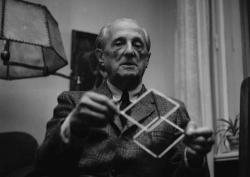
Emil Artin
 Germany
- Early Life and Education
- Academic Career
- Emigration to the United States
- Mathematical Contributions
- Legacy and Influence
Early Life and Education
Emil Artin was born in Vienna, Austria-Hungary, in 1898. His parents, Emil Artin Sr. and Emma Laura-Artin, provided him with a rich cultural upbringing in the arts and music. Artin's surname, inherited from his Armenian grandfather, reflects the family's Armenian heritage.
In 1916, Artin enrolled at the University of Vienna, but his studies were interrupted by military service during World War I. After the war, he continued his education at the University of Leipzig in Germany, where he earned a doctorate degree in 1921.
Academic Career
Artin began his academic career in Germany, teaching at the University of Göttingen and the Hamburg University. In 1929, he married Natasha Ruen, a student of his. The rise of Nazi Germany forced Artin to leave his position in Hamburg in 1937 due to his wife's Jewish heritage.
Emigration to the United States
Seeking refuge from the Nazi regime, Artin emigrated to the United States in 1937. He held teaching positions at Indiana University (1938-1946) and Princeton University (1946-1958). After his retirement from Princeton, Artin returned to Hamburg University in 1958.
Mathematical Contributions
Artin's mathematical contributions spanned various fields, including algebraic geometry, number theory, and algebra. He is widely recognized for his seminal work in algebra, particularly in collaboration with Emmy Noether on abstract and general algebra.
Artin's contributions to field theory are notable. He developed the theory of real fields with Otto Schreier and solved Hilbert's famous 17th problem. His work in algebraic number theory, utilizing Galois cohomology, led to the formulation of Artin's reciprocity law.
Legacy and Influence
Artin's brilliance as a mathematician is reflected in the profound impact of his work on subsequent generations. Among his notable students are Serge Lang and John Tate. His son, Michael Artin, is also a distinguished mathematician, continuing his father's legacy.