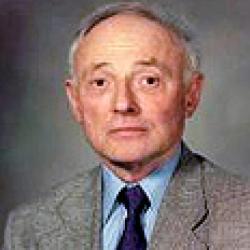
Hugo Steinhaus
 Poland
- Biography of Hugo Steinhaus
- Early Education and Academic Career
- World War II and Later Years
- Contributions and Legacy
Biography of Hugo Steinhaus
Hugo Steinhaus, whose full name was Władysław Hugo Dionizy Steinhaus, was born in 1887 in Jasło, Austria-Hungary (now Poland). He came from a Jewish family, and his father, Bogusław, owned a brick factory and was a merchant. Despite his family's desire for him to become an engineer, Hugo was drawn to abstract mathematics and began studying the works of famous mathematicians on his own.

Early Education and Academic Career
In 1905, Steinhaus completed his secondary education at a gymnasium in Jasło. He then became a student at Lviv University, where he continued to study mathematics. In 1906, he transferred to Göttingen University, where he obtained his Ph.D. in philosophy in 1911. His doctoral dissertation, titled "Neue Anwendungen des Dirichlet'schen Prinzips" ("New applications to Dirichlet's principle"), was written under the guidance of David Hilbert.

After the outbreak of World War I, Steinhaus returned to Poland and served in the Polish Legion. He eventually settled in Kraków, where he began working at Jan Kazimierz University in 1917. In 1925, he became a full professor. Steinhaus is known as one of the founders of the Lviv School of Mathematics.
World War II and Later Years
During World War II, Lviv became a battleground, but Steinhaus decided to remain in the city, even though he was Jewish. He spent the years of Nazi occupation underground, and he later admitted that the 24 hours between the departure of the Germans and the arrival of the Soviets were the happiest in his life.
Steinhaus was known for his wit, and many of his aphorisms remain popular today. Some of his famous quotes include "While I keep silent, I do not give my consent," "I am a physicist and have the right to preserve energy," and "Love makes discoveries, debauchery makes inventions." His aphorisms were even published separately and translated into several languages, although this occurred after his death.
In 1945, Steinhaus moved to Wrocław, where he worked at Wrocław University and gained a reputation as a brilliant mathematician, just as he had in Lviv. In 1961, he emigrated to the United States, where he continued his work.
Contributions and Legacy
Steinhaus made significant contributions to the theory of series (power, orthogonal, and Fourier series), probability theory, topology, and the theory of convex bodies. He authored numerous popular works on mathematics, including "What Mathematics Is, and What It Is Not," "Heads or Tails," "Mathematical Snapshots," and "One Hundred Problems In Elementary Mathematics."
Hugo Steinhaus passed away on February 25, 1972, at the age of 85, in Wrocław.