Emil Filla
 Czech
Czech- Biography of Emil Filla
- Early Life and Education
- Explorations in Art
- Development of Cubism
- Publications and Associations
- Later Life and Legacy
- World War II and Later Years
- Legacy and Honors
Biography of Emil Filla
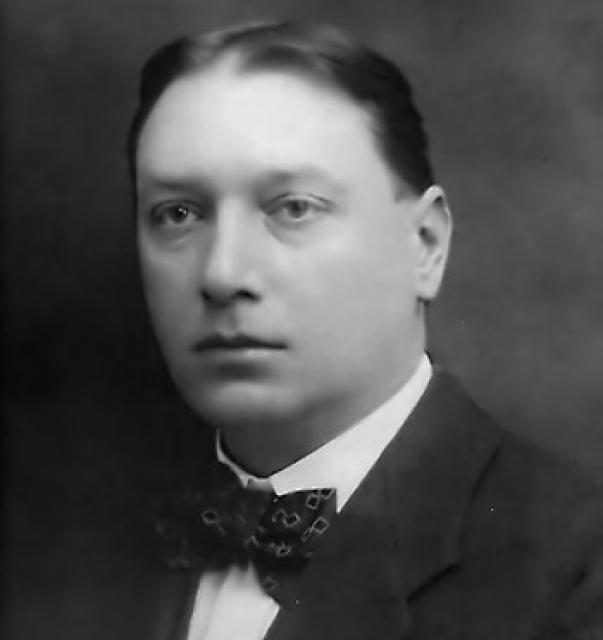
IntroductionEmil Filla was a Czech artist and one of the leaders of the Czech avant-garde school between the First and Second World Wars. He was also one of the founders of Cubism in painting.
Early Life and Education
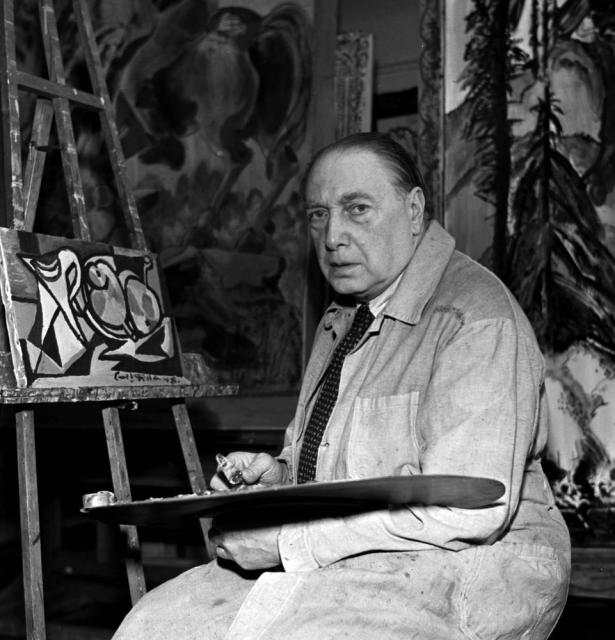
Emil Filla was born on April 4, 1882, in Chropyně, Moravia, which was not yet part of the Czech Republic. He spent his childhood in Brno, where he attended school and worked as a secretary in a postal office. It was in Brno that his artistic talent was discovered and encouraged by his parents. In 1903, with some painting experience, Filla enrolled in the Academy of Fine Arts in Prague. However, he left the academy after three years, despite being one of its most talented students.
Explorations in Art
Filla, along with a group of young artists who rejected traditional teaching methods, embarked on their own experiments. He was greatly influenced by the works of Norwegian painter Edvard Munch, who visited Prague with his exhibition. Filla's early works were characterized by constant searching, disappointments, small victories, and an inconsistency in his style. However, his talent was recognized by the Czech Association of Artists, and he became a member in 1909, remaining a member until his death.
Development of Cubism
In 1910, Filla began experimenting with Cubism and Expressionism. His early works drew inspiration from the themes and style of the great Baroque artist El Greco. However, he gradually became interested in contemporary artists and pushed the boundaries of Cubism, taking it to a new level of development. Filla created still lifes in the Cubist style and incorporated collage techniques in some of his works, giving rise to the genre of art installation.
Publications and Associations
In 1911, Filla edited several issues of the popular art magazine "Volné směry" and expressed his admiration for the genius of Pablo Picasso. However, his colleagues in the association responded negatively, leading him to temporarily break ties with them and establish his own association of Cubist artists called "Skupina výtvarných umělců."
Later Life and Legacy
Shortly before the outbreak of World War I, Filla moved to Paris. However, as the war began, he relocated to the more immigrant-friendly Netherlands. During this time, he collaborated with artist and sculptor Otto Gutfreund to create the first sculpture in the Cubist style. After the war, Filla returned to Prague, restored his relationship with the Association of Artists, and continued his artistic career. Alongside paintings, he also produced sculptures and installations. Filla's artwork included glass designs for the Czech Pavilion at the International Exposition of Modern Industrial and Decorative Arts in Paris in 1925. Most of his works from this period were executed in the style of Synthetic Cubism, a more primitive variant of Cubism.
World War II and Later Years
On the first day of World War II, Emil Filla was arrested along with the renowned Czech writer Josef Čapek, who was the brother of the famous Czech writer Karel Čapek. Filla spent the entire war in concentration camps but survived. After his liberation, he began teaching painting at the Academy of Arts, Architecture and Design in Prague. He was one of the first artists to hold art exhibitions in post-war Czechoslovakia. Throughout his life, Filla continued to work, leaving behind a vast artistic legacy as a painter and theorist that formed the foundation of contemporary art.
Legacy and Honors
Emil Filla passed away on October 7, 1953, leaving behind a worldwide recognition as an artist who introduced the world to the works of Picasso and numerous other artists. In 1998, he was posthumously awarded the Order of T.G. Masaryk, 3rd class.


