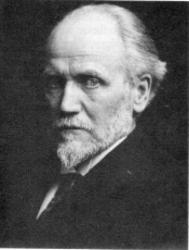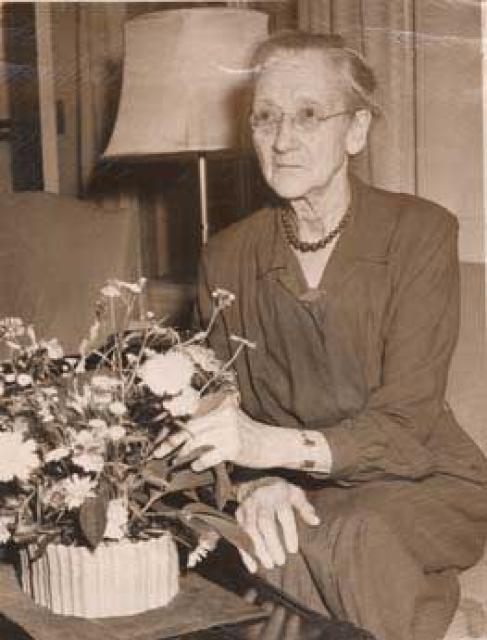
Emily Greene Balch
 USA
USABiography of Emily Greene Balch
Emily Greene Balch was an American economist, pacifist, and the Nobel Peace Prize laureate in 1946. She was born into a prosperous lawyer's family. After graduating from a private women's college in 1889, she continued her independent study of sociology. With a grant from her college, she studied economics at the Sorbonne in 1890-1891, resulting in the publication of her work "Public Assistance of the Poor in France" in 1893. Balch attended courses at Harvard and the University of Chicago, and then dedicated another year to the study of economics at the University of Berlin.
In 1896, she began teaching at Wellesley College, becoming a professor of economics and sociology in 1913. In addition to her teaching career, Balch also held various government and municipal positions. She served on state commissions on education and immigration, and in 1913, she led the commission on minimum wage, which passed the first national minimum wage law. She actively advocated for social issues, participating in movements for women's suffrage, racial equality, regulated child labor, and improved working conditions.
Balch gained widespread fame with her book "Our Slavic Fellow-Citizens" (1910), in which she investigated the main residential areas of Slavs in the United States, Austria, and Hungary, the countries from where they emigrated. This helped to refute arguments about the racial inferiority of Slavs, which were used to justify restrictions on their immigration to the United States.
Her involvement in the pacifist movement and participation in the two Hague Conferences on peace in 1899 and 1907 were also among Balch's interests. However, it was not until the outbreak of World War I in 1914 that she realized her main goal was to fight for humanity's salvation from the threat of war. As a delegate to the International Congress of Women in The Hague, together with Jane Addams and 40 other activists, Balch formed the U.S. delegation. During the war, she participated in the development of peace proposals for consideration by the warring parties. As part of the delegation from the Congress, she visited Russia and the Scandinavian countries, trying to persuade their governments to come up with peaceful initiatives. Along with Jane Addams and Alice Hamilton, she co-authored the book "Women at The Hague: The International Congress of Women and Its Results" (1915).
Upon returning to the United States, Balch actively campaigned against U.S. involvement in the war. The administration of Wellesley College, dissatisfied with Balch's views, refused to renew her contract. This became a turning point in her career. After leaving the college, she began working for the liberal magazine "The Nation," speaking out against war, mobilization, and espionage legislation.
In 1919, she became a delegate to the Second International Congress of Women in Zurich. Balch was one of the founders of the Women's International League for Peace and Freedom and served as its first secretary-treasurer until 1922. However, in 1934, when the League experienced financial difficulties, she returned to leadership positions as the League's international secretary on a pro bono basis. It was for her work in the League that she was awarded the Nobel Peace Prize in 1946. During the interwar period, she played an active role in various peacekeeping missions for governments, international organizations, and commissions. Many projects of the League of Nations, such as disarmament, internationalization of aviation, and drug control, would not have been possible without her participation.
As the spread of Nazism occurred, she moved away from the idea of non-resistance to evil and adopted more stringent anti-fascist views, especially during World War II. The establishment of universal peace through the internationalization of key water resources, aviation, and more became the focus of her attention. Even after receiving the Nobel Peace Prize at the age of 79 in 1946, she continued to maintain working ties with the Women's International League for Peace and Freedom, now as an honorary member.
Emily Greene Balch's works include "Approaches to the Great Settlement" (1918), "Our Slavic Fellow-Citizens" (1910), "Public Assistance of the Poor in France" (1893), "Women at The Hague: The International Congress of Women and Its Results" (1915), and "The Miracle of Living" (1941).