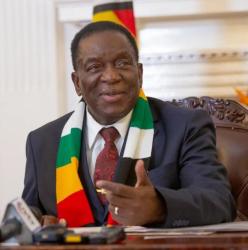
Emmerson Mnangagwa
 Zimbabwe
- Early Life and Education
- Involvement in the Liberation Struggle
- Arrest and Imprisonment
- Return to Rhodesia and Political Activism
- Government Positions
- Potential Successor to Mugabe
- Political Crisis and Power Struggle
- Presidency
- Personal Life
Early Life and Education
Emerson Mnangagwa was born in 1946 in Zvishavane, Southern Rhodesia (now Zimbabwe). His early education was at a local rural school. His family later moved to Northern Rhodesia (now Zambia), where Mnangagwa attended a construction school and then enrolled at a technical college. However, he was expelled from college for his political activism against colonial authorities.
Involvement in the Liberation Struggle
Mnangagwa joined the Zimbabwe African People's Union (ZAPU) in 1962. He underwent military training in Tanzania and Egypt. In 1963, he switched allegiance to the Zimbabwe African National Union (ZANU). Mnangagwa played a key role in the Crocodile Group, a sabotage unit responsible for attacks on white farmers and Rhodesian security forces.
Arrest and Imprisonment
In 1965, Mnangagwa was arrested by Rhodesian police and sentenced to 10 years in prison for terrorism. While in prison, he continued his legal education and earned a Bachelor of Laws degree from the University of London. After serving part of his sentence, he was deported to Zambia.
Return to Rhodesia and Political Activism
In 1977, Mnangagwa was elected to the top leadership of ZANU and became the assistant on special duties to Chairman Robert Mugabe. He headed ZANU's security services and played a prominent role in the Lancaster House Conference in 1979, which paved the way for Zimbabwe's independence.
Government Positions
In the first independent Zimbabwe government, Mnangagwa served as Minister of State Security and oversaw the integration of various military forces into the Zimbabwean army. He also played a role in the suppression of ZAPU and the Ndebele minority in the early 1980s. Mnangagwa held several ministerial positions, including Minister of Justice, Minister of Finance, and Minister of Defence.
Potential Successor to Mugabe
Mnangagwa was considered a close confidant and potential successor to President Robert Mugabe. His appointment as Vice-President in 2014 solidified his position in the succession race. However, his close relationship with Mugabe also exposed him to accusations of involvement in human rights abuses.
Political Crisis and Power Struggle
In 2017, Mnangagwa was abruptly dismissed from his post as Vice-President on allegations of plotting against Mugabe. This sparked a political crisis that culminated in a military takeover and Mugabe's forced resignation. Mnangagwa returned to power as President and First Secretary of ZANU-PF in November 2017.
Presidency
After his inauguration, Mnangagwa faced the challenge of restoring Zimbabwe's economy and improving international relations. He implemented economic reforms aimed at attracting foreign investment and rebuilding infrastructure. However, his government has also been criticized for its handling of protests and the suppression of dissent.
Personal Life
Emerson Mnangagwa is married to Auxillia Mnangagwa, who is involved in politics and ZANU-PF. They have three children together, and Mnangagwa has several other children from previous marriages.