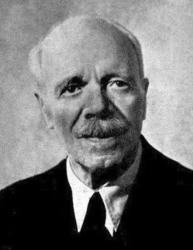
Engelbert Kampfer
 Germany
- Engelbert Kaempfer: German Traveller and Naturalist
- Swedish Embassy and Visit to Russia (1683)
- Surgeon and Explorer (1685-1692)
- Literary Contributions
- Exploration of Kazan and Beyond (1723)
- Legacy
Engelbert Kaempfer: German Traveller and Naturalist
Early Life and EducationEngelbert Kaempfer, born in 1651, was the son of a pastor. He pursued studies in philosophy, theology, and medicine at various institutions in Germany, including Lemgo, Hameln, Lüneburg, Lübeck, Danzig, and Kraków.
Swedish Embassy and Visit to Russia (1683)
In 1681, Kaempfer settled in Sweden. Two years later, he joined the Swedish embassy led by Ludvig Fabricius to Persia. Recommended by the notable philosopher and historian Samuel Pufendorf, Kaempfer traversed the Moscow Kingdom, meticulously recording his observations in his travelogue.
Surgeon and Explorer (1685-1692)
While serving as secretary of the Swedish embassy in Persia, Kaempfer enlisted as a surgeon on a Dutch fleet patrolling the Persian Gulf. This voyage enabled him to explore Arabia, India, Java, Sumatra, Siam, and Japan, where he spent two years.
Literary Contributions
Kaempfer's most celebrated work is his "History of Japan" (1727), originally written in German and later translated into English. It became a seminal study of Japanese culture and history, renowned for its accuracy and detail. Other notable publications include "Amoenitatum exoticarum" (1712) and "Icones selectae plantarum" (1791).
Exploration of Kazan and Beyond (1723)
In 1723, Kaempfer published "Newest States of Kazan, Astrakhan, Georgia, and Others...," a comprehensive study of the Russian Empire's eastern territories. Its Russian translation, dating back to the 18th century, remains an invaluable historical document.
Legacy
Kaempfer's extensive travels and meticulous observations enriched European knowledge of distant lands. In his honor, Linnaeus named the plant genus Kaempferia after him. His unpublished manuscripts, housed in the British Museum, continue to provide valuable insights into the world of the 17th and 18th centuries.