
Erhard Eppler
 Germany
Biography of Erhard Eppler
Erhard Eppler, a German politician, social democrat, and founder of the German Agency for International Cooperation (Deutsche Gesellschaft für Internationale Zusammenarbeit), was born in Ulm and grew up in Schwäbisch Hall. His father was the director of a local school.
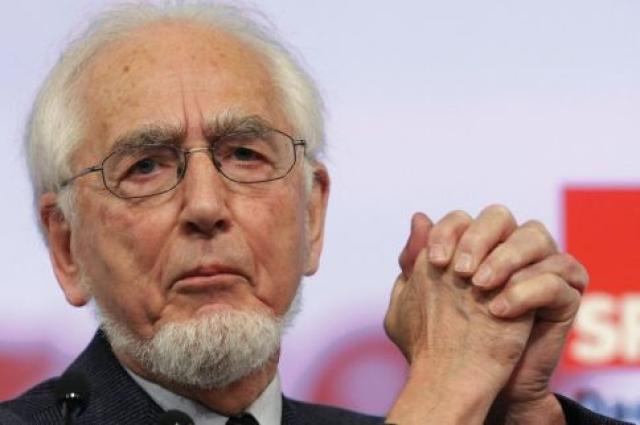
During World War II, Eppler served in the anti-aircraft defense forces from 1943 to 1945. In 1946, he successfully passed all the necessary exams and studied English, German, and history at the universities of Frankfurt, Berne, and Tuebingen. In 1951, Eppler completed his Ph.D., focusing on the tragedies of the Elizabethan era. After fulfilling all the requirements, he finally became a teacher and worked at a school from 1953 to 1961.

In September 1943, at the age of 16, Eppler joined the Nazi Party (NSDAP). Later, he claimed that this step on his part was a rare foolishness. During his studies in Berne in the late 1940s, Eppler met Gustav Heinemann, one of the founders of the Christian Democratic Union (CDU). From 1949 to 1950, Heinemann served as the Minister of the Interior, and later, he left the cabinet along with other members of the Union and representatives of other parties. The mass exodus was provoked by the policy of integration with the Western world initiated by Chancellor Konrad Adenauer.
In 1952, Eppler joined Heinemann's new project, the Gesamtdeutsche Volkspartei (GVP). However, like most other GVP representatives, he later moved to the Social Democratic Party of Germany (SPD) following the party's failure in the 1956 elections. Eppler's participation in the SPD, along with Heinemann, who were prominent representatives of the Protestant Church, debunked the myth of the party's deeply atheistic orientation.
From 1970 to 1991, Eppler worked in the National Executive Committee of the party, actively participating in the creation of a tax reform project and formulating the party's key principles. From 1973 to 1981, he led the party's branch in Baden-Württemberg. For a time, Eppler was considered the most likely candidate for the role of Prime Minister of this state, but unfortunately, SPD lost to CDU in both 1976 and 1980 elections.
From 1961 to 1976, Eppler served as a member of the Bundestag, the parliament of the Federal Republic of Germany. From 1972 to 1976, he represented Heilbronn and later became the representative of Rottweil in 1976. Unfortunately, Eppler failed to win a seat in Parliament in the 1976 and 1980 elections, which led him to permanently leave his parliamentary career.
On October 16, 1968, Eppler became the Minister for Economic Cooperation in Chancellor Kurt Georg Kiesinger's government. He retained his position under Willy Brandt but couldn't work with Helmut Schmidt. After significant funding cuts to his department in 1974, Eppler resigned in protest.
Having left mainstream politics, Erhard Eppler focused on matters of the Protestant Church and continues to be involved in church affairs to this day. Additionally, he is a member of the Wacholderhof Association, a group dedicated to international cooperation, trade, and ecological issues.


