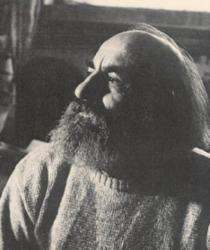
Erich Hekkel
 Germany
Biography of Erich Heckel
Erich Heckel was a prominent German expressionist artist. He was born in Döbeln, near Chemnitz, in 1883. During his time in secondary school, Heckel befriended Karl Schmidt-Rottluff. Together with other students, they formed a discussion group called "Die Brücke" (The Bridge), where they discussed anti-bourgeois literature and art theory. Some of their favorite authors were Nietzsche and Dostoevsky.
In 1904, at the age of 21, Erich started studying architecture at the Dresden Technical University. In 1901, he became acquainted with and befriended artist Schmidt-Rottluff. In 1904, he studied in Chemnitz and enrolled in the Saxon Technical Institute's architecture department. In 1905, Heckel, along with Ernst Ludwig Kirchner, Emil Nolde, and Schmidt-Rottluff, founded the art group "Die Brücke" and worked in an architectural office. They rented a former butcher shop on Berlinerstrasse 60 to use as a shared art studio.
In 1907, Heckel quit his job and went to Dangast for studies. In 1908, he spent several months in Dangast with Schmidt-Rottluff, focusing on drawing. In 1909, he traveled to Italy, including Verona, Padua, Venice, and Rome. During the summer, he went to the Moritzburg ponds with Kirchner. He moved to Berlin in 1911.
In 1912, Heckel began his friendship with Franz Marc and Lionel Feininger. In 1913, "Die Brücke" group disbanded, and Heckel held his first solo exhibition at the Gurlitt Gallery in Berlin. In 1914, he participated in an art exhibition in Cologne and volunteered as a medical orderly at the start of World War I.
In 1915, Heckel met Max Beckmann and Lovis Corinth and got married to Mila Frieda Georgi. In 1918, he returned to Berlin. From 1919 to 1944, he made annual summer trips to Osterholz, where he worked extensively. In 1929, he traveled to Provence, the Pyrenees, northern Spain, and Aquitaine. In 1931, he visited northern Italy.
In 1937, the Nazi regime labeled Heckel's art as "degenerate," and 729 of his works were removed from German museums. In 1944, his Berlin studio was destroyed during an air raid, and he relocated to Hemmenhofen on Lake Constance. From 1949 to 1955, he worked as a professor at the State Academy of Fine Arts in Karlsruhe.
Selected Paintings:
- "Brick Workshop (Dangast)" 1907, Madrid, Thyssen-Bornemisza Museum
- "Red Houses" 1908, Bielefeld, Museum of Art
- "Bathers on the Shore" 1909, Düsseldorf, Kunsthalle Düsseldorf
- "Bathing Women" 1912, Wuppertal, Von der Heydt Museum
- "Windmill near Dangast" 1909, Duisburg, Wilhelm Lehmbruck Museum
- "Tram Line in Berlin" 1911, Mönchengladbach, Abteiberg Museum
- "Glass Day" 1913, Munich, State Gallery of Modern Art
- "Feast of Corpus Christi in Bruges" 1914, Mülheim, State Museum
- "Flemish Plain" 1916, Mönchengladbach, Abteiberg Museum
- "Spring" 1918, Berlin, National Gallery SMPK
- "Blooming Apple Trees" 1907, Hamburg, private collection