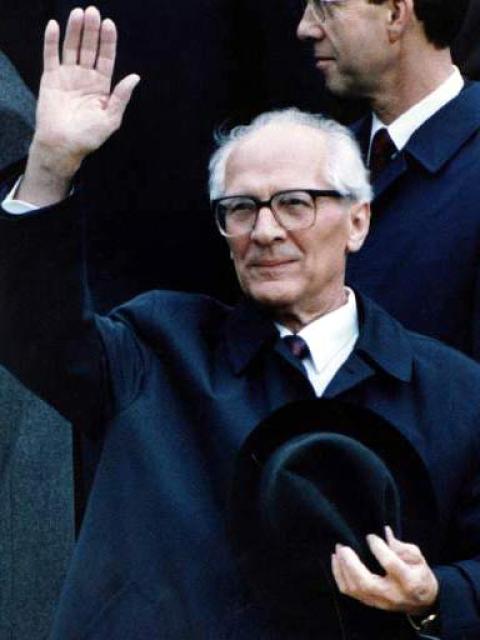
Erich Honecker
 Germany
- Biography of Erich Honecker
- Political Career
- Views and Policies
- Downfall and Exile
- Final Years and Death
Biography of Erich Honecker
Early Life and ActivismErich Honecker was born on August 25, 1912, in the Saar region, to a family of a miner. He joined the Communist Youth Union in 1926 and became a member of the Communist Party of Germany (KPG) in 1929. In 1933, after Hitler came to power, Honecker organized a resistance group in Berlin. However, in 1935, he was arrested and sentenced to 10 years in prison on charges of treason.
Political Career
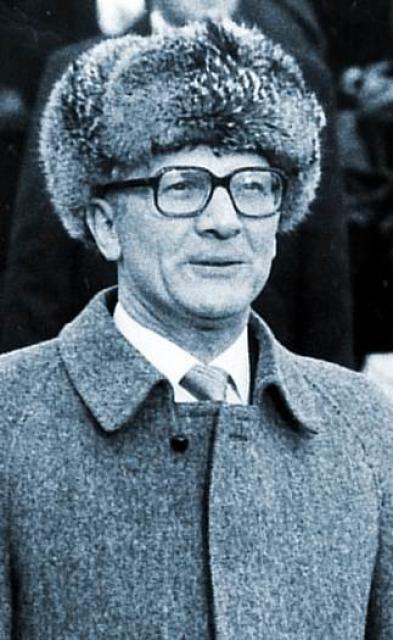
After his release at the end of World War II, Honecker served as the secretary for youth affairs in the Central Committee of the KPG. In 1946, he became the chairman of the Free German Youth Union. Honecker played a crucial role in the merger of the KPG and the Social Democrats in the Soviet occupation zone, leading to the establishment of the Socialist Unity Party of Germany (SEPG) in 1946. He was elected to the Central Committee of the new party.
In 1958, Honecker became a member of the Politburo of the SEPG and in May 1971, he succeeded Walter Ulbricht as the First Secretary of the party. In October 1976, he became the chairman of the State Council, the head of the German Democratic Republic (GDR).
Views and Policies
Honecker held a hostile attitude towards the West and expressed his opposition to the idea of German reunification through a constitutional amendment in 1974, which declared the GDR as a "socialist state of the German people." He believed that close ties with the Soviet-led socialist community were the best guarantee for the security and prosperity of the GDR. Honecker resisted internal reforms and strengthened the repressive regime in the country.
Downfall and Exile
On October 18, 1989, Honecker was forced to resign, and on December 3, he was expelled from the SEPG. In December of the same year, an investigation was launched against him on charges of abuse of power, corruption, and personal enrichment. However, Honecker's deteriorating health prevented him from standing trial.
After the reunification of Germany, the accusations against Honecker expanded, with him being held responsible for ordering border guards to shoot anyone attempting to flee to the West at the Berlin Wall. In March 1991, he went to Moscow and remained there until July 1992 when the Russian government returned him to Berlin. The trial was canceled due to his worsening health.
Final Years and Death
In January 1993, Honecker was granted permission to travel to Chile. He passed away in Santiago on May 29, 1994.


