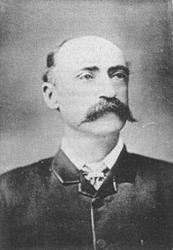
Erik Laksman
 Switzerland
- Early Life and Education
- Journey to Siberia
- Scientific Expeditions and Discoveries
- Travels and Expeditions in Russia
- Nерчинск and Subsequent Expeditions
- Death on an Expedition
Early Life and Education
Erik Laxmannwas a Finnish-Swiss explorer and naturalist. Despite discrepancies in historical records regarding his nationality, Laxmann himself identified strongly with Russia. His father, a struggling merchant, had a large family of nine children and lived in poverty. After his father's tragic drowning in 1756, Laxmann's family faced even greater hardships.
Laxmann received his early education in Rantasalmi, Finland. In 1775, he enrolled in the gymnasium in the city of Porvoo, where he began collecting his first herbaria and mineral specimens. Upon completing gymnasium, he enrolled as a student at the University of Turku in 1757. However, his financial struggles forced him to withdraw after only a few weeks.
Journey to Siberia
In 1762, Laxmann relocated to St. Petersburg and met renowned geographer and pastor Johann Gottfried Büsching. Büsching secured Laxmann a position as a tutor and teacher of natural history and botany at the German Church of St. Peter and Paul. Inspired by a yearning for exploration, Laxmann eagerly prepared to embark on a journey to Siberia.
An opportunity arose in 1764 when Akinfiy Demidov, the owner of the Kolyvan-Voskresensk mines in Siberia, gifted them to Empress Elizabeth Petrovna. Laxmann petitioned for the position of pastor in Barnaul, the administrative center of the mines. His request was granted, and he arrived in Barnaul in March 1764.
Scientific Expeditions and Discoveries
With his appointment as pastor secured, Laxmann could pursue his scientific interests. He purchased a carriage and horses, enabling him to travel extensively for research. Laxmann visited saltpeter caves near Biysk, Ust-Kamenogorsk in southern Siberia, and the Tomsk and Chulym regions, where he discovered coal.
During his travels, Laxmann documented the presence of inscriptions on towering cliffs along the Dzhida River. These inscriptions, known as "Tangut writings," were associated with Tibetan Lamas and scholars. Laxmann also provided a scientific description of the hot mineral springs near Ust-Turka, analyzing their chemical composition and measuring their temperature.
In 1767, Laxmann explored the Altai Mountains, using a barometer to determine their height. He collected and studied Siberian insects. Upon his return from Siberia in 1769, Laxmann continued his research in Moscow, analyzing his collections and publishing articles in various scientific journals.
Travels and Expeditions in Russia
In 1770, Laxmann was invited by the director of the Russian Academy of Sciences, Count Grigory Orlov, to participate in an expedition to the Orlov family estates along the Volga River. Over time, the expedition expanded in scope. It traveled through Moscow, Voronezh, the Don River Valley, Sarepta, and Tsaritsyn.
In 1778 and 1779, Laxmann led two expeditions to the Northern and Central Russian Uplands. Their purpose was to investigate the geological formations, mineral deposits, and mining industries in these regions.
Nерчинск and Subsequent Expeditions
Laxmann's final appointment was as the assistant commander of the Nерчинск mines in 1781. This role gave him extensive opportunities for further exploration and scientific discoveries in Siberia. He traveled tirelessly throughout his vast district and beyond, discovering rare and valuable minerals, such as beryls, aquamarines, onyx, and porphyry.
In 1784, Laxmann was appointed as a "mineralogical traveler" for the imperial cabinet, tasked with searching for and procuring gemstones for the royal palaces.
Death on an Expedition
In 1795, Laxmann embarked on an ambitious journey to the Bukhara Emirate. Tragically, his plans were cut short. He fell ill and passed away on January 5, 1796, at the Yamskaya station in Drevlyanskoe, near the town of Tobolsk. Laxmann was buried in the small cemetery by the Vagay River.