Ernest Chausson
 France
Biography of Ernest Chausson
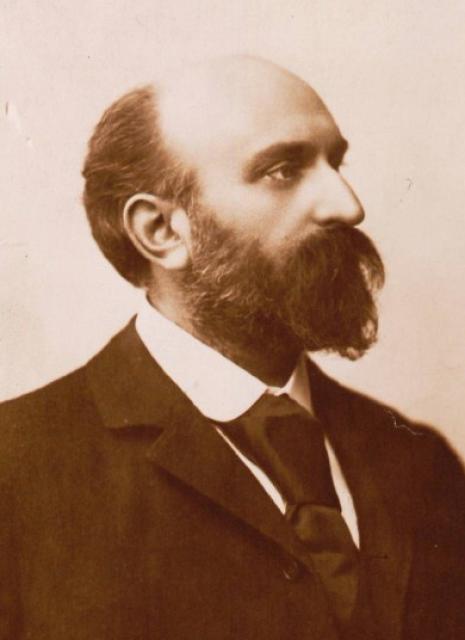
Ernest Chausson, a French composer, was born on January 20, 1855, in Paris. Despite his father's insistence on studying law at the University of Paris, Chausson received his diploma in 1877 with indifference, believing that his true calling lay in literature, art, and music. It was under the influence of his close friend, Madame de Ressak, that he turned to music, but it was Wagner's operas, which he heard in Munich, that played a significant role in his musical aspirations. In 1879, Chausson entered the Paris Conservatory, initially studying under Jules Massenet and later becoming a student of César Franck. He became the secretary of the National Musical Society, alongside Vincent d'Indy, and supported Claude Debussy, who would later become a close friend, on his tumultuous path to success.
Chausson traveled extensively throughout Europe, from Czechoslovakia to Spain, but he had a particular fondness for the Italian town of Fiesole, where he often retreated, and Brussels, where his music was always received more warmly than in his native Paris. Tragically, Chausson passed away on June 10, 1899, in Lime, from injuries sustained in a bicycle accident.
Notable Compositions
Some of Chausson's most famous works include his Symphony in B-flat major, Op. 20 (1889-1890) and Poem for Violin and Orchestra, Op. 25 (1896). Among his lesser-performed compositions are the Trio in G minor, Op. 3 (1881), Symphonic Poem "Viviane," Op. 5 (1882), Poem of Love and the Sea, Op. 19 (1882-1892), Chamber Composition "Concert" in D major, Op. 21 (1889-1891), Music for "The Legend of Saint Cecilia," Op. 22 (1892), String Quartet in A major, Op. 30 (1897), Orchestral Composition "Soir de fête," Op. 32 (1898), Unfinished String Quartet in C minor, Op. 35 (1899), and numerous songs (Mélodies). Chausson's only published opera, "King Arthur," Op. 23 (1866-1895), despite its undeniable merits, is rarely performed (with its only staging occurring in 1903 in Brussels).
Chausson contributed to the development of French song, aiming to achieve a seamless integration of voice, poetic text, and instrumental accompaniment. Rather than being an innovator, he was a perfectionist who refined the work of his predecessors, avoiding extremes and emotional outbursts in favor of profound lyricism, refined expression, and polished form. His music occupies a unique place between the dramatic mysticism of Wagner and Franck's romanticism and the "airy" impressionism of Debussy.