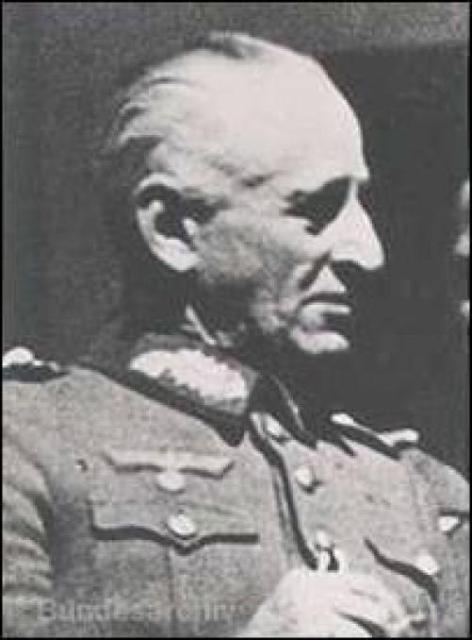
Ernst-August Kostring
 Germany
- Biography of Ernst-August Kestring
- Participation in World War I
- Service as Military Attaché in Moscow
- Later Life
Biography of Ernst-August Kestring
Ernst-August Kestring was a German diplomat and military leader who held the rank of Cavalry General. He began his military service in the 4th Ulan Regiment in Toruń from 1895 to 1896. On November 25, 1898, he was promoted to reserve lieutenant. From July 1, 1901, he served in the 5th West Prussian Duke Friedrich Eugen of Württemberg Cuirassier Regiment. On December 18, 1913, he was promoted to captain.
Participation in World War I
During World War I, Kestring primarily held staff positions. In the autumn of 1916, he was severely wounded. After recovering, he became a member of the German military mission in the Ottoman Empire from December 1917. From January 1918, he served as the first adjutant to the Chief of the General Staff of the Turkish Army, General Hans von Seeckt.
After Germany's capitulation, Kestring remained in the Reichswehr. In 1922, he was promoted to major and served in the staff of the 16th Cavalry Regiment in Erfurt. From March 1, 1927, he commanded the 10th Prussian Cavalry Regiment. He was promoted to colonel on April 1, 1930 and was fluent in the Russian language.
Service as Military Attaché in Moscow
From 1931 to 1933, Kestring served as Germany's military attaché in Moscow. In March 1933, he was retired with the rank of major general. However, he returned to service in August 1935 and served as Germany's military attaché in Moscow from 1935 to 1941, simultaneously serving in Lithuania until 1940. During his time in the Soviet Union, he was promoted to lieutenant general on August 1, 1937, and Cavalry General on October 1, 1940.
From June 1941 to September 1942, Kestring was in reserve. He advocated for the involvement of Russian citizens in the fight against Bolshevism and was utilized as an expert on Russian affairs. From September 1942, he was appointed as the representative for Caucasus affairs in Army Group A. He was responsible for the formation of local military units. From June 1943, he served as the inspector of the North Caucasus Peoples' Connections. From January 1, 1944, he held the position of General of Volunteer Connections in the Supreme Command of the Armed Forces (OKW).
Later Life
On May 4, 1945, Kestring was captured by American forces. He was released in 1947. He was initially considered as a witness for the Nuremberg trials, but the USSR objected to his use as a witness.


