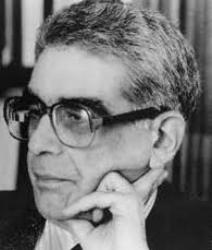
Ernst Cassirer
 Germany
- Early Life and Education
- Academic Career in Germany
- Exile and Life in the United States
- Major Works
- Philosophy of Culture
Early Life and Education
Ernst Cassirer was born in 1874 in Breslau, Poland (presently Wrocław, Poland). He pursued his education at the universities of Berlin, Leipzig, and Heidelberg. In 1896, he became the assistant of Professor Hermann Cohen in Marburg.
Academic Career in Germany
Cassirer embarked on an academic career in philosophy, holding teaching positions at the University of Berlin (1906-1919) and the University of Hamburg (1919-1933). He rose to prominence as a leading figure in the Marburg School of Neo-Kantianism, emphasizing the importance of transcendental method in understanding historical, philosophical, and scientific knowledge.
Exile and Life in the United States
With the rise of Hitler in Germany, Cassirer emigrated to England in 1933 and obtained a professorship at the University of Oxford. From 1935 to 1941, he taught philosophy at the University of Gothenburg in Sweden. In 1941, he moved to the United States, where he lectured at Yale and Columbia Universities until his passing in 1945 in Princeton, New Jersey.
Major Works
Cassirer's philosophical contributions are notable in his works on symbolic forms and human culture:
"Philosophy of Symbolic Forms"(3 volumes, 1923-1929): This magnum opus explored the role of symbols in human cognition and cultural expression.
"Essay on Man: An Introduction to a Philosophy of Human Culture"(1944): Cassirer presented a comprehensive analysis of human nature and the development of culture.
Philosophy of Culture
Expanding on traditional Kantian thought, Cassirer advocated for a philosophy of culture that encompassed the study of mythology and religion. He believed that human beings are fundamentally symbol-making creatures, and that culture is a product of the human capacity for symbolization.