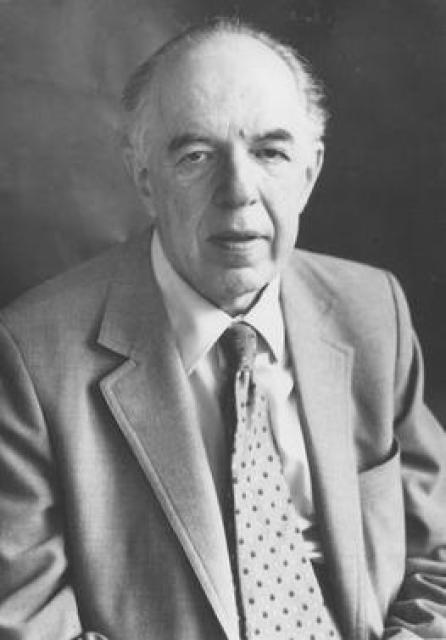
Ernst Gombrich
 Great Britain
Early Life and Education
Ernst Hans Gombrich was born in Vienna, Austria, on March 30, 1909, to a wealthy Jewish family that had converted to Protestantism. His parents were well-connected in Vienna's cultural circles. His father, a lawyer, was a classmate of Hugo von Hofmannsthal, while his mother had studied piano under Anton Bruckner and was friends with Johannes Brahms, Gustav Mahler, and Arnold Schoenberg.
After graduating from the Theresianum in 1928, Gombrich entered the University of Vienna, where he earned his doctorate in 1933. He began publishing his work in the early 1930s.
Fleeing Nazi Persecution
In 1936, Gombrich fled Austria to escape Nazi persecution and settled in the United Kingdom. He found employment at the Warburg Library (now the Warburg Institute at the University of London).
Work at the Warburg Institute
During World War II, Gombrich worked for the BBC, analyzing German radio broadcasts. After the war, he continued to work at the Warburg Institute until 1976, serving as its Director from 1959. He became friends with the Austrian-born philosophers Karl Popper and Friedrich Hayek, who had also fled Nazi Germany in the 1930s.
Legacy
Gombrich's most famous work is "The Story of Art" (1950), which has sold over 8 million copies worldwide and has been translated into dozens of languages. His other writings include "Art and Illusion" (1960), "Symbolic Images" (1972), and "The Sense of Order" (1979).
Personal Life
Ernst Gombrich and his wife, Ilse Heller, had two sons, Richard (born 1937), who became a renowned Indologist, and Leon (born 1945). Gombrich died in London on November 3, 2001, at the age of 92.



