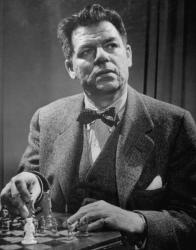
Ernst Liubich
 Germany
- Biography of Ernst Lubitsch
- Early Works
- Princess Oyster
- Move to the US
- The Sound Era
- Legacy and Final Works
Biography of Ernst Lubitsch
Ernst Lubitsch, a German and American director and producer, was born on January 29, 1892, in Berlin, Germany. At the age of 16, he started performing in cabarets and music halls. In 1911, he was accepted into Max Reinhardt's theater. From 1913, Lubitsch began acting in comedy films and in 1914, he started directing short films based on his own scripts, often taking on the lead roles himself.
Early Works
Lubitsch's first significant film was the exotic drama "Die Augen Der Mummie Ma" (The Eyes of the Mummy Ma, 1918), starring Pola Negri and Emil Jannings. He followed this with "Carmen" (1918), featuring Pola Negri, which became a star vehicle for many of his historical and exotic film spectacles, including "Madame Du Barry" (1919), "Anne Boleyn" (1920), and "One Arabian Night" (1920).
Princess Oyster
Lubitsch's most acclaimed film during his German period was "Die Austernprinzessin" (The Oyster Princess, 1919), a satirical take on American manners where Lubitsch's signature style began to emerge. His films became known for their ironic and memorable characterizations, unexpected events, cinematographic presentation of episodes that comment on the plot, and a unique atmosphere of frivolity bordering on the permissible.
Move to the US
In 1923, Lubitsch moved to the United States and directed "Rosita" for Mary Pickford. He then returned to the genre of light comedies focused on high society with films such as "The Marriage Circle" (1924), "Forbidden Paradise" (1924), "Kiss Me Again" (1925), "Lady Windemere's Fan" (1925), and "The Student Prince In Old Heidelberg" (1927). Although most of Lubitsch's films were set in Europe, his satirical themes touched on safe subjects such as the pursuit of wealth and the new freedom in gender relationships.
The Sound Era
The introduction of sound made Lubitsch's films, such as "The Smiling Lieutenant" (1931), "If I Had A Million" (1932), and "The Merry Widow" (1934), even more elegant with witty dialogues and music. Having achieved perfection in his chosen genre (many have imitated Lubitsch, but only Billy Wilder occasionally comes close to his mentor), Lubitsch shifted to producing in 1935. Some of his later works include "Bluebeard's Eighth Wife" (1938), "Ninotchka" (1939, starring Greta Garbo), the anti-fascist comedy "To Be Or Not To Be" (1942), and "Heaven Can Wait" (1943).
Legacy and Final Works
Lubitsch's final film, "That Lady In Ermine" (1948), was completed by Otto Preminger eight-and-a-half months before Lubitsch's death from a sixth heart attack. He was posthumously awarded a special Academy Award for his outstanding career. Ernst Lubitsch left a lasting legacy in the film industry, with his sophisticated and witty style influencing many filmmakers.