
Ernst Weis
 France
Biography of Ernst Weiss
Ernst Weiss was a German-speaking Austrian writer and physician of Jewish faith. He was born in Brno, a city in Moravia, in the Austro-Hungarian Empire (now Czech Republic), to Gustav Weiss, a fabric merchant, and his wife Berta Weinberg. He was the second of four children, with both of his brothers later choosing careers in law and his sister, like Ernst, pursuing a career in medicine. Despite facing financial difficulties, Ernst attended school in Brno, Litomyšl, and Hoština. In 1902, he successfully passed his examinations and received his high school diploma.
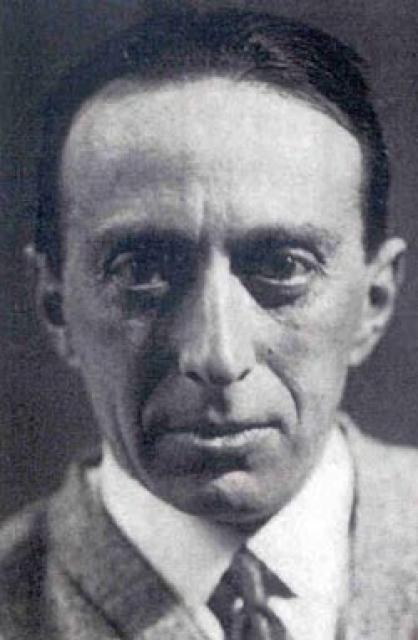
During the years 1902-1908, Weiss studied medicine at the universities of Prague and Vienna. At that time, he did not aspire to be a poet, thinker, or mathematician, but rather only a respectable citizen. After obtaining his medical degree, Weiss worked as a physician in Bern and Berlin. In 1911, he returned to Vienna and worked in the surgical department of the Vienna Hospital.
During this period, Weiss began a correspondence with the renowned Austro-Jewish philosopher Martin Buber. The demanding nature of his work undermined the young doctor's health, and he contracted pulmonary tuberculosis. As part of his treatment, he left Austria and became a ship's doctor. He embarked on several voyages in 1912 and 1913, visiting India and Japan, the impressions of which later formed the basis of some of his novels and stories. In June 1913, Weiss met Franz Kafka, and this encounter solidified his path as a writer. With Kafka's support, Weiss published his first novel, "Die Galeere" ("The Galley"), that same year. In addition to Kafka, Weiss associated with many other Prague writers, including Franz Werfel, Max Brod, and Johannes Urzidil. It was during this time that Weiss also met dancer and actress Rahel Sanzara, who became his long-time love and companion.
In 1914, Weiss was conscripted into the Austro-Hungarian Army and served as an officer in the medical corps during World War I. He fought on the Eastern Front in Hungary and Volhynia, later serving in the rear. In 1916, his second novel, "Der Kampf" ("The Struggle"), was published. Shortly before the end of the war in 1918, Weiss was awarded the Golden Cross for Bravery.
After the war, Weiss lived in Prague, which had become the capital of Czechoslovakia. He practiced medicine and worked as a surgeon at the Prague City Hospital from 1919 to 1920. In 1919, his play "Tanja" premiered in Prague. In 1920, Weiss left his medical career behind and moved to Berlin, where he lived for the next decade, focusing on his literary pursuits. During this period, he wrote and published several novels, including "Nahar" (1921), "Die Feuerprobe" (1923), "Männer in der Nacht" (1925), "Boetius von Orlamünde" (1928), and "Georg Letham. Arzt und Mörder" (1931). He also wrote short stories and plays, which were staged in Berlin and Prague. His novel "Boetius von Orlamünde," later titled "Der Aristokrat" ("The Aristocrat"), won a silver medal at the Olympic Art Competition in Amsterdam as an "epic work." In 1930, Weiss was awarded the Adalbert Stifter Prize.
In 1933, following the Reichstag fire, Weiss left Berlin and returned to Prague, where he worked and cared for his ill mother. She passed away in January 1934, and a few weeks later, Weiss emigrated to France, settling in Paris. His time in Prague during this period was marked by deep depression, from which he only recovered abroad.
Unable to obtain a license to practice medicine, Weiss earned a living by contributing to various emigrant publications. He relied on the assistance of writers Thomas Mann and Stefan Zweig. In 1934, he published the novel "Der Gefängnisarzt oder die Vaterlosen" ("The Prison Doctor, or The Fatherless"), followed by "Der arme Verschwender" ("The Poor Spendthrift") in 1936, dedicated to Stefan Zweig and becoming one of Weiss's most famous works. In 1937, he published "Der Verführer" ("The Seducto"), dedicated to Thomas Mann.
On February 8, 1936, Rahel Sanzara, Weiss's beloved, died of cancer in Berlin. In 1938, Weiss participated in a competition organized by the American Guild for German Cultural Freedom, submitting the anti-fascist novel "Der Augenzeuge" ("The Eyewitness"), written from the perspective of a doctor who treated a soldier blinded by a nervous disorder during the war, and thus becoming an unwanted witness of the future leader's weakness, which had a fatal impact on his career and life. The novel was based on a true event involving Adolf Hitler.
On June 14, 1940, when German troops entered Paris, Ernst Weiss decided to take his own life. He ingested poison and slit his veins in his hotel room. His suicide attempt was not immediately successful, and he died the following night in a Paris hospital. After his death, a suitcase containing unpublished manuscripts disappeared. The location of Weiss's burial remains unknown.
The story of Ernst Weiss's suicide served as the basis for the novel "Transit" (1944) by German writer Anna Seghers.


