Eruhan
- Early life and first publications
- Realism and the lives of ordinary people
- Exile, return and teaching
- Death and literary legacy
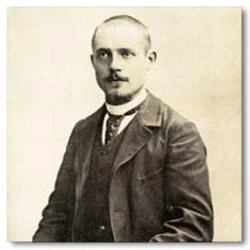
Eruhan was a leading voice of Western Armenian realist fiction, remembered for stories that brought the precarious lives of Istanbul’s poor into vivid focus. Writing at the turn of the twentieth century, he portrayed fishermen, orphaned children, displaced Armenians and working families with compassion and unsentimental detail. His own life was marked by exile and return, before he was killed during the Armenian Genocide in 1915.
Early life and first publications
Born Yervant Srmakeshkhanlian in July 1870, he grew up in the Armenian neighborhood of Khasgyugh in Constantinople, now Istanbul. He studied first at the neighborhood’s Nersesian School and then at the National Central School in Galata. There he encountered the teacher and intellectual Minas Cheraz and met the future literary critic Arshak Chobanian, who became a lifelong friend. Through persistent reading he learned French and discovered the realist writers whose close observation of everyday life would shape his own work.
In 1890 Srmakeshkhanlian began working for the Armenian newspaper Arevelk, or “The East,” where the newsroom became an important training ground. He published his first widely noticed story, “Papuk” (“Grandfather”), in 1891. The story drew praise from established Armenian writers and helped launch his literary career. He adopted the pen name Eruhan and went on to publish short fiction and critical writing in Arevelk, Massis and other Armenian periodicals.
Realism and the lives of ordinary people
Eruhan’s fiction developed the Western Armenian realist tradition. Rather than centering wealthy heroes, his stories followed people living with poverty, precarious work and social exclusion. He wrote about Istanbul fishermen, washerwomen, orphans and Armenian refugees, revealing the hard conditions behind the city’s busy public life. His prose combined close social observation with warmth for people whose choices were constrained by circumstance.
Among the stories associated with his early work are “The Consumptive,” “The Washerwoman” and “Instead of Fish.” His novel Amirayi aghchike, usually translated as “The Amira’s Daughter” or “The Lord’s Daughter,” was serialized in 1902 and later published in full. It offers a realist portrait of Armenian society in nineteenth-century Constantinople, including the distance between social classes. He also translated French fiction into Armenian, including works by Alphonse Daudet and Hector Malot, helping bring European realist literature to Armenian readers.
Exile, return and teaching
The violence against Armenians in 1896 forced Eruhan to leave Constantinople. He settled in Varna, Bulgaria, where he continued writing for Armenian newspapers, edited the publications Shavigh and Sharzhum, and taught in Armenian schools. In 1904 he moved to Egypt, continuing his literary and editorial work in Alexandria and Cairo.
After the Ottoman constitutional revolution of 1908, he returned to Constantinople. He again edited Arevelk, taught Armenian at the National Central School and worked as an inspector at the Surp Haç School in Üsküdar. In 1913 he moved to Kharberd, present-day Elazığ, to become principal of the Getronagan School. He continued to write for the Armenian press while teaching and leading the school.
Death and literary legacy
In April 1915 Eruhan was arrested and imprisoned. He and his family were deported and killed during the Armenian Genocide. He was forty-four. His life ended just as he was guiding a new generation of students in Kharberd, but his fiction endured as a record of Armenian urban life and the hardships of people often left at the margins of literature. His stories remain valued for bringing realist precision and human sympathy to the lives of ordinary Western Armenians.