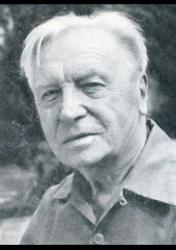
Etien Phalkone
 France
Biography of Étienne Falconet
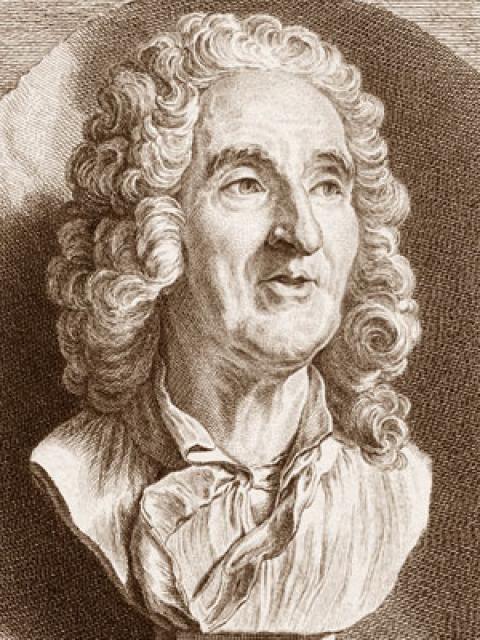
Étienne Maurice Falconet, a French sculptor, is best known as the author of the monument to Peter the Great in Saint Petersburg. He was born on December 1, 1716, the son of a simple carpenter. The Falconet family originated from the province of Savoy. Étienne first learned the skills of working with sculptural materials in the workshop of his uncle, Nicolas Guillot, a master marble worker. His teacher and close friend was Jean-Louis Lemoyne, a sculptor to the king and a prominent portraitist. Falconet maintained warm feelings and gratitude towards him throughout his life. He worked with Lemoyne on the decoration of the Versailles Park, where he first encountered the works of the renowned French sculptor Pierre Puget.
Most of Falconet's life was spent in Paris, a city that served as his school of artistic mastery. His talent developed primarily within the national culture. Unlike most artists of his time, Falconet did not travel to Italy. Instead, he familiarized himself with the works of ancient masters through molds, drawings, and engravings. In the "Salon of 1765," Denis Diderot gave a vivid characterization of Falconet: "Here is a gifted man, possessing all possible qualities, compatible and incompatible with genius. He has an abundance of delicacy, taste, intelligence, refinement, nobility, and elegance; he is coarse and polite, friendly and gloomy, tender and cruel; he works with clay and marble, reads and contemplates; he is tender and coarse, serious and playful; he is a philosopher who believes in nothing and knows well why."

Despite his many qualities, Falconet had a circle of loyal friends. When Falconet was twenty-eight years old, he submitted his plaster group "Milo of Croton" for admission to the Royal Academy in 1744. Although it was coldly received by both the Academy and public critics, Falconet was accepted into the Academy as an "appointee" for this work. He only received the title of academician ten years later in 1754 when he translated this group into marble. This title not only brought him honor but also certain privileges, such as the right to receive royal commissions, an annual pension, a free workshop in the Louvre, and the title of a nobleman.

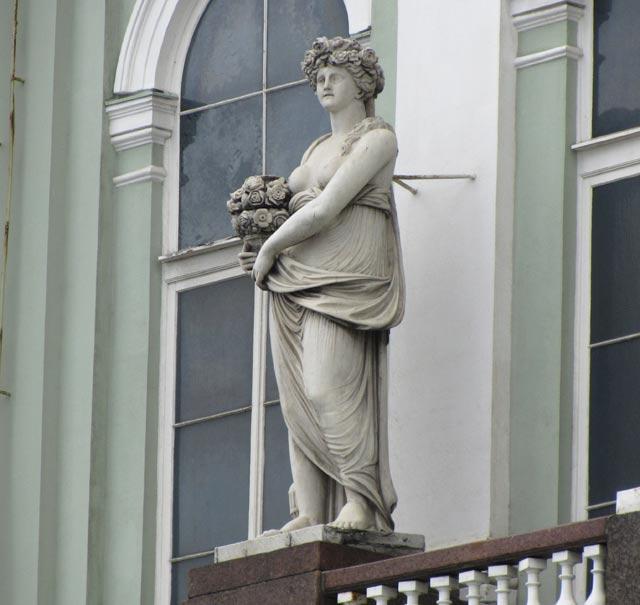
Falconet's fate did not favor him greatly. It was not until 1748 that he was commissioned to create the group "France Embracing the Bust of Louis XV." However, the work turned out to be unsuccessful. One of Falconet's subsequent works, completed in 1752 by order of the Directorate of Royal Buildings, was the marble statue "Music." Falconet created several more works through orders from the Directorate. However, he still did not enjoy royal favors, even though he deserved them more than others. He received his pension only in 1755.

In 1753, Falconet participated in a competition for the reconstruction and decoration of the Church of Saint Roch. The work in the church continued for ten years, almost until the sculptor's departure for Russia. Falconet's immense talent allowed him to work at the Sèvres porcelain factory starting from 1757. He held the position of director of the modeling workshop. Collaborating with Jean-Baptiste Le Prince, Falconet initially produced models based on his drawings and later began working independently. The sculptor managed to reveal the special artistic properties of French porcelain, which he brilliantly utilized.

Falconet finally achieved long-awaited success with his participation in the Salon of 1757. And what a success it was! Critics were overwhelmed with admiration when describing Falconet's two marble statues - "Threatening Cupid" and "Bather." The public couldn't decide which one they preferred and passionately discussed both. Falconet's Cupid is a mischievous and joyful child. Smiling and seemingly threatening or warning, he is about to shoot an arrow at his intended target. Sincerity and immediacy emanate from the entire figure of Cupid. The slight tilt of the head, the cunning gaze, the sly smile, and the finger pressed against the lips - all these details are finely observed in life.

His "Bather" also garnered significant success. The flowing and graceful lines of the girl's slender figure and her movements are full of grace. She stands, leaning against a tall tree stump, lightly holding the light fabric at her hip and testing the water with the tips of her toes. The bather's head is slightly inclined, emphasizing the flexible line of her neck, and her face, with a slightly elongated oval, retains a childlike roundness. The simplest motifs under Falconet's chisel become convincing and poetically expressive.
In the early 1760s, Falconet's work began to show stronger tendencies towards classicism. The statue "Tender Grief" appeared, and the same classicist features are characteristic of the group "Pygmalion and Galatea." With this work, Falconet achieved true triumph at the Salon of 1763.
However, in 1764, Madame de Pompadour died, putting Falconet in a difficult position. He not only lost his patroness, whom he had been sculptor to for many years but also the client for a work he had already begun, on which he had spent considerable personal funds. Fortunately, an invitation to Russia came at just the right time. Falconet was impressed by Catherine II's idea of creating a monument in memory of Peter the Great. After settling his affairs, Falconet embarked on the journey in September 1766, accompanied by his young apprentice Marie Anne Collot. Collot served as his assistant in Russia for twelve years, and then became his daughter-in-law by marrying his son, the painter Pierre Etienne.
Based on a sketch of the equestrian monument to Peter the Great made in Paris in 1766, Falconet, upon arriving in Russia, began creating the model. He immersed himself in preparatory work, thoroughly studying all the historical material related to the life and activities of Peter the Great, as well as his contemporary sculptural portraits created by Carlo Rastrelli - a bronze bust and a plaster mask. This allowed him to better understand the individuality of Peter's personality.
In early 1768, the sculptor began working on the model of the monument to Peter the Great in the actual size of the future statue. "Not once, but hundreds of times, the rider galloped at my command on various horses," Falconet writes. "For the eye to comprehend the effects of such rapid movements, it requires multiple repeated impressions. After studying the overall movement of the horse chosen by me, I proceeded to study the details. I examined, modeled, and drew each part from below, above, front, back, and from both sides because this is the only way to familiarize oneself with the subject."
Falconet also sculpted the rider himself, using the general's P.I. Melissino as a model, who resembled Peter in terms of height and physique. After finalizing the composition of the monument, Falconet was concerned about the stability of the statue. He found a clever solution by introducing a snake as a support. With its bold compositional and technical decisions, strictness, and laconicism of forms, the monument to Peter the Great is one of the best examples of monumental art of that time. Falconet managed to break with the traditions of equestrian monuments of the 18th century, which featured calm figures of kings, commanders, and victors in Roman armor or extravagant clothes surrounded by numerous allegorical figures.
With utmost simplicity, the sculptor aimed to express his idea: "I will limit myself to a statue of a hero, whom I do not consider as a commander or a conqueror. I want to show people a more beautiful image of a legislator, a benefactor of his country, who stretches his right hand over the land he traveled. He climbs on top of a pedestal in the form of a rock, which is the emblem of conquered difficulties."
The monument was unveiled on August 7, 1782, on the centenary of Peter's reign. However, Falconet was not destined to witness this long-awaited event. In September 1778, before the monument was erected, Falconet left Saint Petersburg. The responsibility for the completion of the monument was then transferred to the architect Feltin. After its unveiling, to which the sculptor was not even invited, Catherine II sent Falconet two medals - one gold and one silver - minted to commemorate the occasion. Prince Dmitry Golitsyn presented them to Falconet at his estate in Châtenay. The sculptor burst into tears.
This was the final event in Falconet's life associated with the monument to Peter the Great. It took place approximately six months before he suffered a stroke that led to paralysis. The illness confined Falconet to his bed, and for the last eight years of his life, he was cared for by Marie Anne Collot. On January 24, 1791, the life of the remarkable artist came to an end.