Etienne de La Boetie
 France
- Étienne de La Boétie: A Humanist Philosopher and Friend
- Political Career and Friendship with Montaigne
- Literary Legacy
- Posthumous Publication and Historiography
- Rediscovery and Influence
Étienne de La Boétie: A Humanist Philosopher and Friend
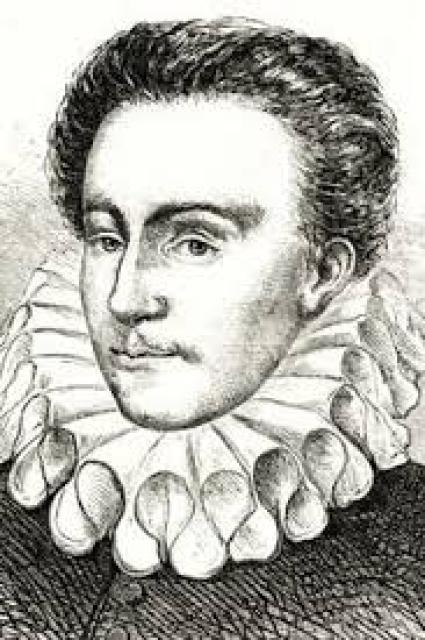
Early Life and EducationÉtienne de La Boétie was born into a wealthy merchant family in Périgord, France. His father, Antoine, held a legal degree and served as a lieutenant to the seneschal of Périgord. After his father's untimely death, La Boétie was adopted by his namesake uncle, a priest with a legal background, who provided him with a formidable education.
La Boétie excelled in his studies at the University of Orleans' law faculty, where he encountered the influential Calvinist professor Anne du Bourg. He composed his famed treatise, "Discourse on Voluntary Servitude," during this period, revealing his republican leanings and admiration for the Roman Republic.
Political Career and Friendship with Montaigne
Despite not meeting the age requirement of 25, La Boétie was appointed as a councilor to the Bordeaux Parliament. His political views remained republican, and he formed a close friendship with Michel de Montaigne, who referred to him as the "second Budé."
Literary Legacy
In 1571, Montaigne published La Boétie's French and Latin poems, as well as translations of Xenophon and Plutarch. However, he withheld two significant works: "Discourse on Voluntary Servitude" and a "Memoir on the Troubles in France." Montaigne feared the volatile political climate would hinder their reception.
Posthumous Publication and Historiography
La Boétie's "Discourse on Voluntary Servitude" was eventually published in 1576 by the Genevan pastor Simon Goulart in a collection of political pamphlets critical of the French monarchy. Despite Montaigne's initial concerns, the treatise gained popularity among proponents of individual liberty and resistance to tyranny.
Rediscovery and Influence
During the reigns of Henry IV and Louis XIV, "Discourse on Voluntary Servitude" became a sought-after text, circulating among those who opposed absolutism. Even Cardinal Richelieu, despite his conservative agenda, sought out the work. "Discourse on Voluntary Servitude" remains a seminal text in political philosophy, inspiring revolutionaries and advocates of civil disobedience.