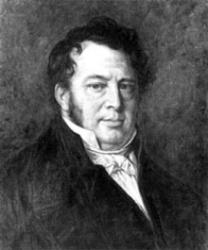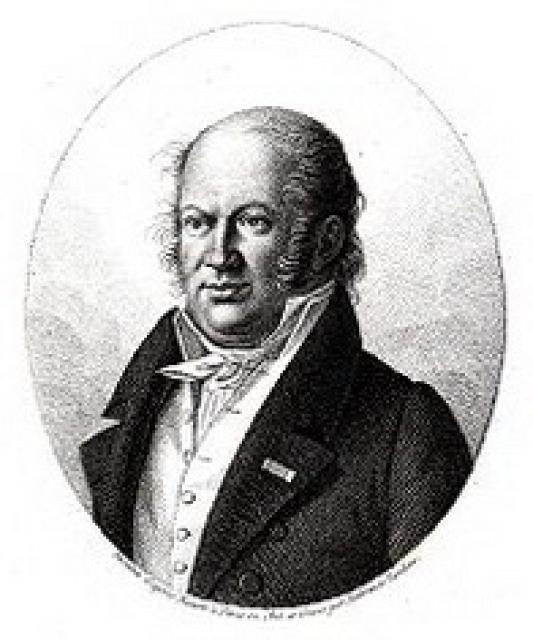
Etienne Geoffroy Saint-Hilaire
 France
- Early Life and Education
- Napoleonic Expedition to Egypt
- Advances in Zoology and Comparative Anatomy
- Debate with Georges Cuvier
- Later Years and Influence
- Legacy
Early Life and Education
Étienne Geoffroy Saint-Hilaire, a notable French zoologist, was born on April 15, 1772, in Étampes, France. His father, Jean, was a lawyer and his mother, Marie Françoise, was from a wealthy family. Geoffroy Saint-Hilaire's passion for natural history developed early on, and he received his formal education at the Collège de Navarre in Paris.
Napoleonic Expedition to Egypt
Geoffroy Saint-Hilaire's scientific career took a formative turn when he joined the French expedition to Egypt under Napoleon Bonaparte in 1798. As part of the scientific team, he played a crucial role in documenting the region's rich biodiversity. During the expedition, he discovered and classified numerous new species of mammals, reptiles, amphibians, and fish.
Advances in Zoology and Comparative Anatomy
Upon his return from Egypt, Geoffroy Saint-Hilaire dedicated his research to comparative anatomy. He proposed the concept of unity of plan, arguing that all animals share a common structural framework. He believed that this unity could be traced back to a common ancestor and that adaptations to different environments led to the diversity of species. Geoffroy Saint-Hilaire's work foreshadowed the evolutionary ideas of Charles Darwin and laid the foundation for modern evolutionary biology.
Debate with Georges Cuvier
Throughout his career, Geoffroy Saint-Hilaire engaged in a prominent debate with his contemporary, Georges Cuvier. Cuvier emphasized the importance of comparative anatomy in classifying species, while Geoffroy Saint-Hilaire focused on embryological development and argued for the unity of all animal life. The debate between these two scientists was pivotal in shaping 19th-century zoology and contributed to the ongoing dialogue between functional and developmental biology.
Later Years and Influence
Geoffroy Saint-Hilaire's influence extended beyond zoology. He became a member of the French Academy of Sciences and served as its president several times. He also founded the Muséum national d'Histoire naturelle and played a key role in establishing the Jardin des Plantes as a major research center. Geoffroy Saint-Hilaire's ideas influenced not only biologists but also philosophers and scientists in other fields, such as Johann Wolfgang von Goethe and Ernst Haeckel.
Legacy
Étienne Geoffroy Saint-Hilaire's legacy endures as a pioneer in evolutionary biology and comparative anatomy. His research and writings advanced the understanding of the unity and diversity of life. He challenged prevailing scientific dogma and paved the way for future scientific discoveries. Geoffroy Saint-Hilaire's work continues to inspire scientists and naturalists today and remains a testament to his profound contributions to the field of biology.