
Etienne Lenoir
 France
- Early Life and Career
- Encounter with Mechanics
- Independent Mechanic and Inventor
- Experimental Inventions
- The Gas Engine
- Lenoir et Cie
- International Recognition
- Decline and Legacy
- Death and Legacy
Early Life and Career
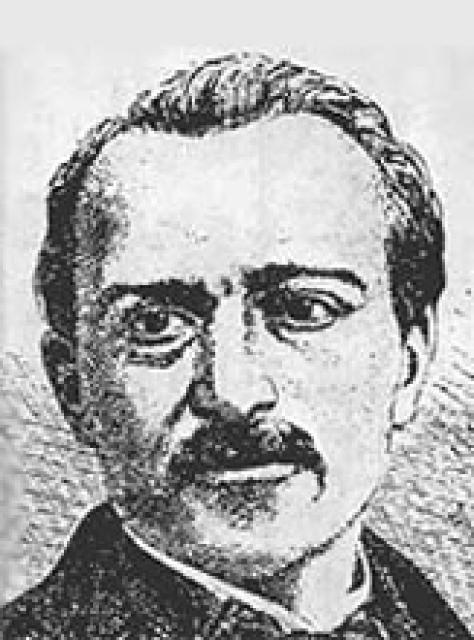
Jean-Joseph Étienne Lenoir was born in Belgium in 1822. At the age of eight, he lost his father, a Belgian industrialist. Aspiring to become an engineer, Lenoir planned to attend the prestigious École Polytechnique in Paris. However, financial constraints forced him to abandon his dream and work as a waiter in a modest restaurant called "Le Célibataire."

Encounter with Mechanics
As a waiter, Lenoir regularly interacted with mechanics and engineers who frequented the restaurant. Inspired by their conversations, he began to develop ideas for improving the internal combustion engine. Soon after, he left his job and joined a workshop where he formulated new enamels.
Independent Mechanic and Inventor
After a falling out with his employer, Lenoir became an independent mechanic, repairing various items from carriages to kitchenware. However, his hard work brought him little financial gain. He eventually joined the mechanical and foundry workshop of an Italian, Marinoni. Under Lenoir's direction, the workshop transformed into a galvanoplasty establishment.
Experimental Inventions
With stable employment, Lenoir began experimenting with inventions. He created variations on the electric motor, dynamo regulator, and water meter. Patenting his creations, he continued his research, drawing upon the engineering knowledge of his predecessors.
The Gas Engine
Lenoir's influence on automotive history lies primarily in his invention of the internal combustion engine. Inspired by the steam engine, he developed a two-stroke gas engine. The prototype impressed Lenoir and his sponsor, Marinoni, but it overheated rapidly.
Lenoir et Cie
Despite a legal setback that sealed his machine, Lenoir's invention motivated him to establish his own company, Lenoir et Cie. Several French and German firms produced his 4-horsepower gas engine. In 1860, Lenoir secured a patent for his invention.
International Recognition
The Lenoir gas engine garnered attention at the 1862 Paris Exposition. A French journal published a diagram and description of Lenoir's eight-seat omnibus powered by his engine. Lenoir's invention marked an era of engineering innovation and bold ideas.
Decline and Legacy
Lenoir's success was short-lived. In 1878, his former colleague Nikolaus Otto introduced a 4-stroke engine with superior efficiency. Lenoir's two-stroke design proved less competitive, and his reputation faded.
Death and Legacy
Jean-Joseph Étienne Lenoir died on August 4, 1900. Despite his lack of financial success or widespread fame, he played a pivotal role in advancing automotive technology. Lenoir's contributions laid the groundwork for the development of the modern internal combustion engine, which continues to undergo constant refinement in the pursuit of more efficient and sustainable transportation.


