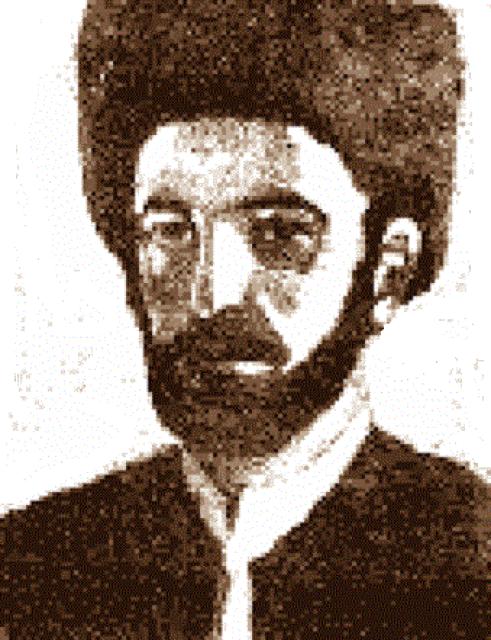
Etim Emin
Early Life and Education
Etim Emin was born in 1838 in the village of Tsiling, Dagestan, into the family of a renowned judge, Qadi Sawzihan. His lineage can be traced back to Abukar al-Tsilingwi, his illustrious grandfather. From a young age, Emin showed an aptitude for learning and attended the esteemed madrasa of scholar Agahmirza-effendi in Kean.
Literary Pursuits
Emin's literary journey began as a pioneer in Lezgian literature. He adopted the pen name Etim, meaning "orphan," to express his sympathy for the oppressed. His works addressed social injustices, such as in "Cry for Help," and condemned national oppression in poems like "Uprising of 1877." Emin also envisioned a just society, as seen in "To Friends" and "To Peace." His lyrical poems gained widespread popularity.
Poetic Innovations
Etim Emin introduced several innovations to Lezgian poetry. He employed the eight-syllable syllabic verse, a form previously unknown in Lezgian literature. He also utilized repetitive rhyming patterns, enhancing the musicality of his works. These innovations left a lasting legacy on Lezgian poetry.
Family Legacy
Etim Emin's family played a significant role in his life and work. His father, Sawzihan al-Yaltsuqvi, was a respected judge and a source of inspiration for his son. His mother, Leyla, came from the esteemed family of the Darquish village. He had several siblings, including his brothers Abd al-Malik, Muhammad-Nabee, and al-Husayna, and sisters Suwar, Fatimat, Kizhanum, and Eylihan.
Later Life and Legacy
Etim Emin's later years were marked by continued literary production and recognition. He wrote in various languages, including Lezgian, Azerbaijani, and Arabic. His work remains a testament to his literary genius and the rich cultural heritage of the Lezgian people. Emin's legacy as a trailblazing poet and social commentator continues to inspire generations of literary artists.