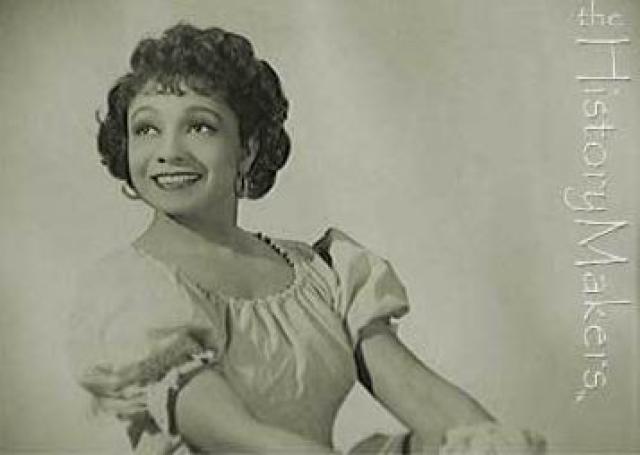
Etta Moten
 USA
- From Texas to the Stage
- A Landmark Hollywood Moment
- Porgy and Bess and a New Public Role
- A Legacy of Culture and Service
Etta Moten turned a resonant contralto voice into a career that broke barriers on stage, screen and radio. Audiences remember her as Bess in Porgy and Bess and for her unforgettable song in Gold Diggers of 1933. But her life stretched well beyond performance: she became a civic leader, arts patron and advocate for Black culture at home and abroad.
From Texas to the Stage
Born in Weimar, Texas, on November 5, 1901, Moten was the daughter of an African Methodist Episcopal minister and a schoolteacher. Music and education were part of her family life from the start. She studied at Western University in Kansas and later graduated from the University of Kansas in 1931.
Her strong voice and stage presence opened doors in musical theatre. In the 1930s, she moved between Broadway and Hollywood, at a time when Black performers were often confined to narrow stereotypes. Her screen appearances in Flying Down to Rio and Gold Diggers of 1933 offered rare opportunities for a Black actress to appear in glamorous, non-domestic roles.
A Landmark Hollywood Moment
In Gold Diggers of 1933, Moten sang “My Forgotten Man,” a powerful number that gave voice to the hardship of the Depression and its impact on veterans. The film brought her national attention. Her appearance in Flying Down to Rio as a Brazilian singer, performing “The Carioca,” added another memorable moment to her early screen career.
In 1934, Eleanor Roosevelt invited her to perform at the White House for President Franklin D. Roosevelt’s birthday celebration. Singing “My Forgotten Man,” Moten became the first African American woman to perform there in the twentieth century. The milestone made visible both her talent and the barriers she had crossed to reach a national stage.
Porgy and Bess and a New Public Role
Moten’s signature theatrical role came in the 1942 Broadway revival of George Gershwin’s Porgy and Bess. As Bess, she helped bring the opera’s emotional heart to life, earning wide acclaim. She also performed in concerts and hosted a Chicago radio program, I Remember When, sharing music and stories with listeners.
Her public life grew increasingly international. With her husband, journalist and publisher Claude Barnett, she traveled to Africa, including as part of a U.S. delegation to Ghana’s independence celebrations in 1957. She served on boards and supported institutions across Chicago, including the DuSable Museum of African American History, the South Side Community Art Center and the Chicago Lyric Opera.
A Legacy of Culture and Service
Moten remained active in cultural and civic work into old age. She helped connect Black artists, institutions and communities in Chicago with larger conversations about civil rights, women’s leadership and African independence. She died on January 2, 2004, at 102.
Her legacy rests on several intertwined achievements: a pioneering performance career, a landmark White House appearance and decades of service to the arts and public life. Moten showed how a singer could use the stage not only to entertain, but also to claim space and open doors for those who followed.


