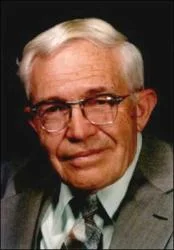
Eugene Joseph Delporte
 Belgium
- Early life and observatory work
- Asteroids, comets and a new observing program
- Mapping the constellations
- Leadership and legacy
Eugène Joseph Delporte turned careful observation into a map of the sky that astronomers still use. A Belgian astronomer whose work ranged from precision measurements of stars to the discovery of asteroids, he is best remembered for helping give every constellation a precise, agreed boundary.
Early life and observatory work
Delporte was born in Genappe, Belgium, on 10 January 1882. He studied at the University of Brussels, earning a doctorate in physics and mathematics with high honors in 1903. That same year he joined the Royal Observatory of Belgium at Uccle as a volunteer assistant. He became an assistant in 1904, an associate astronomer in 1909 and a full astronomer in 1923. In 1936 he became director, a position he held until his official retirement in 1947.
His first specialty was meridian astronomy, the painstaking measurement of celestial positions as stars crossed the observatory’s meridian. Between 1903 and 1919, Delporte made thousands of transit observations, including work for the international Carte du Ciel star-charting project. He helped measure and check the observatory’s meridian circle, determined the longitude difference between Paris and Uccle, and supervised Belgium’s time service. Such work demanded accuracy measured in fractions of a second and supplied dependable reference positions for later astronomical research.
Asteroids, comets and a new observing program
In 1919 Delporte moved to the observatory’s equatorial astronomy department, where his attention turned to comets and minor planets. He first worked visually with a Cooke refractor. The arrival of new Zeiss astrographs around 1925 made it possible to search photographic plates systematically, and Delporte organized a sustained program of observation.
He discovered the asteroid Belgica, followed by Amor and Adonis, and independently discovered the comet now known as Dutoit–Neujmin–Delporte. He measured newly found objects carefully and sent their positions promptly to the astronomical institute at Heidelberg, where the observations could be used to calculate their orbits. This combination of searching, confirming and reporting helped other astronomers follow the objects after their initial appearance on a plate.
Mapping the constellations
Delporte’s most lasting achievement came from a problem that had vexed astronomers for centuries. Constellation figures were familiar cultural patterns, but their borders were often vague or inconsistent. At the International Astronomical Union’s 1925 assembly in Cambridge, Delporte presented a plan for defining the constellations as regions of the sky with clear boundaries. The lines followed the coordinate grid of right ascension and declination, making it possible to say precisely which constellation contained any given celestial object.
The IAU adopted the project, and Delporte prepared its detailed results. Published in 1930 in two volumes as *Scientific Delimitation of Constellations*, his work set out the boundary descriptions and accompanying maps. The system divided the entire sky into 88 precisely bounded constellations. The familiar names and patterns remained, but their limits became consistent across star atlases, observatories and scientific publications. That practical standard is why the constellation boundaries used today are associated with Delporte’s work.
Leadership and legacy
As director at Uccle, Delporte supported the observatory’s instruments and continued to take an active interest in observational astronomy. He served Belgium’s National Committee on Astronomy from 1919, becoming vice-chair in 1930 and chair in 1949. He also led an IAU commission concerned with observations of planets, comets and satellites and with ephemerides, the tables used to predict celestial positions. He edited the Belgian astronomical journal *Ciel et terre* and was recognized by scientific bodies in Belgium, France and Britain.
Retirement did not end his work at the telescope or photographic plate. Delporte continued examining asteroid plates after leaving official duty. He died suddenly in Uccle on 19 October 1955, while still engaged in that work. His career joined two kinds of precision: the exact positions needed to track moving objects, and the clear borders needed to describe the sky. The latter made his name a permanent part of the way astronomers organize the heavens.