Eugene Marin Labiche
 France
Biography of Eugène Labiche
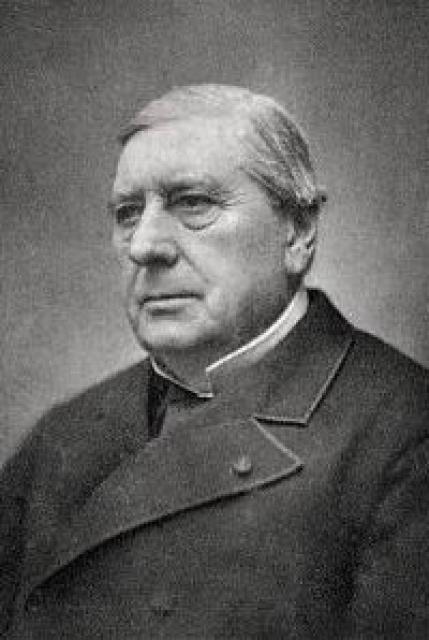
Eugène Marin Labiche was a French playwright, novelist, and author. He was born on May 5, 1815, into a bourgeois family. Labiche studied law and began his literary career at the age of 20. He first published his story, "Les plus belles sont les plus fausses," in the magazine "Chérubin." However, his subsequent stories did not attract much attention from the public.
Labiche then tried his hand at drama criticism in the magazine "Revue des théâtres" and wrote and presented two of his own plays in 1838. His drama "L'Avocat Loubet" was shown at the small theater "Théâtre du Panthéon," and his vaudeville "Monsieur de Coyllin ou l'homme infiniment poli," co-written with Marc Michel, became a success at the Théâtre du Palais-Royal. The provincial actor Grassot became a famous comedian and one of the Parisians' favorites thanks to Labiche's vaudeville.
In the same year, Labiche published a novel called "La Clé des champs," but it failed, and his publisher went bankrupt. This setback, according to the French historian Léon Halévy, was a timely warning from Fate that sent him back to the theater, where a successful career awaited him.
Success as a Playwright and Vaudevillist
Labiche's breakthrough came with his one-act farce "Un Chapeau de paille d'Italie" ("The Italian Straw Hat"), which was first performed in August 1851. The vaudeville quickly became a worldwide masterpiece and remained a staple of the French stage until the early 20th century. Labiche captured the audience's attention with a tangled and amusing situation that unfolds on stage, where someone goes in search of something, and the resolution occurs in the very last moment, just five minutes before the curtain falls.
For the next 25 years, Labiche continued to write successful comedies and vaudevilles, mainly following the same "qui-pro-quo" plan and containing a dose of comic observations and common sense. Labiche once revealed his secret in selecting the main characters for his works, saying, "Among all the subjects that proposed their candidacies, I chose the bourgeois. Essentially ordinary in their vices and virtues, they are halfway between a hero and a scoundrel, between a saint and a libertine."
During the second stage of his career, Labiche collaborated with Alfred Delacour, Adolphe Choler, and others. Emile Augier stated, "The distinctive features that firmly established the fashion for Labiche's plays can be found in all the comedies he wrote in collaboration with various authors. And it is striking that they are absent in those comedies that were written without him."
Labiche's relationship with actor Jean-Marie Michel Geoffroy played a significant role in his life. Geoffroy specialized in playing pompous and flamboyant characters created by Labiche, and many of Labiche's roles were written specifically for him. Some of Labiche's most important plays include "Célimare le bien-aimé" (1863), "Le Voyage en Chine" (1860), "La Cagnotte" (1864), "Un pied dans le crime" (1866), and "La Grammaire" (1867).
Later Years and Legacy
In 1877, Labiche retired from the theater and withdrew to his own estate in the rural Sologne region. There, he directed all his energy towards overseeing agricultural work and land reclamation. His long-time friend Emile Augier visited him and strongly recommended that Labiche publish collected and revised editions of his works. Although Labiche did not show much enthusiasm initially, he eventually allowed the publication of a 10-volume collection of his plays in 1878 and 1879. The collection was well-received, and many people realized that Labiche's success was not solely due to the actors involved in his plays, but rather his own talent for humor and skillfully crafted characters.
As a result of the reevaluation of his works, Labiche was elected a member of the French Academy in 1880. He died on January 23, 1888, in Paris and was buried in the Montmartre Cemetery. Many of his admirers considered Labiche on par with Molière. His plays were more complex and less crude than many other examples of French farce. The theme of love was almost absent from his works, and he also satirized marriage, albeit in a good-natured manner. Labiche never delved into the depths of female psychology in any of his plays, portraying women as pretentious old maids or silly girls.