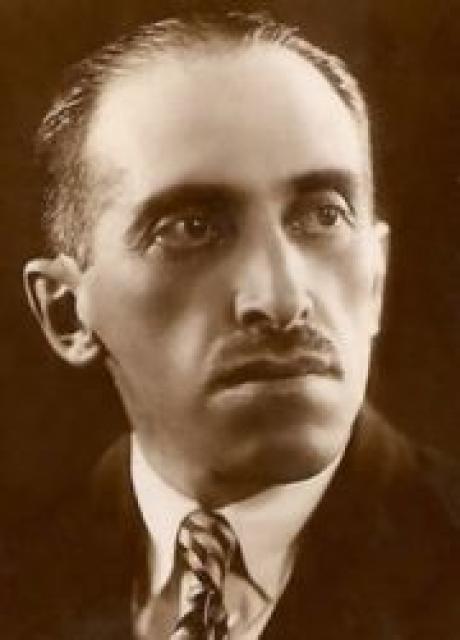
Eugeniy Woolf
- Early Life and Education
- Career at the Nikita Botanical Garden
- Botanical Explorations
- "Flora of Crimea" and Pedagogical Activities
- Legacy and Tragic End
Early Life and Education
Yevgeny Vladimirovich Wulff was born on June 6, 1885, in Simferopol, Russia. He graduated from high school in 1903 and enrolled in the Faculty of Natural Sciences at Moscow University. In 1905, he interned at the Natural History Museum in Simferopol, a hub for studying Crimean flora. In 1906, Wulff transferred to the University of Vienna, where he specialized in botanical geography.
Career at the Nikita Botanical Garden
Upon graduating from the University of Vienna, Wulff returned to Moscow and worked as a research assistant at the Moscow Botanical Garden from 1910 to 1914. During this time, he published several papers on the flora of Crimea and the Caucasus. In 1914, Wulff became the chief botanist of the Nikita Botanical Garden. This marked the beginning of the "Wulffian era" in the study of Crimean flora.
Botanical Explorations
Wulff conducted over 20 expeditions throughout the Crimean Peninsula, covering every corner of the region. He and his team assembled a comprehensive herbarium, featuring nearly 26,000 sheets of Crimean plant specimens, representing over 2200 species. This collection laid the foundation for his landmark work, "Flora of Crimea."
"Flora of Crimea" and Pedagogical Activities
Wulff began developing the concept for "Flora of Crimea" in 1910-1911. From 1927 to 1930, he published the first three volumes of this monumental work. In addition to his research, Wulff served as a private docent from 1920 and later as a professor at Taurida University from 1921 to 1926.
Legacy and Tragic End
Yevgeny Wulff's contributions to Crimean botany are immeasurable. His "Flora of Crimea" remains an essential reference for studying the peninsula's plant life. Tragically, Wulff met his end on December 21, 1941, during the Siege of Leningrad, when a Nazi shell fragment pierced his heart.